Home
Hintergrund
Aktuelles / Artikel
Online Events
Petitionen
Download/Materialien
Radio Beiträge
Radio
Termine
Demonstration
3 + 12
Bündnisse weltweit
Bücher,Filme +
Musik von/
über Mumia
Hörbuch
Kontakt
Links
Archiv
•Bündnis
•Mumiaartikel Deutsch
•Mumiaartikel Englisch
•Stopp Todesstrafe
•Anti-Repressions-
Nachrichten
Impressum
Datenschutzerklärung

ARCHIV
Stoppt die Todesstrafe
2020
- Trump administration has executed more Americans than all states combined
- (Innocence Project - Tennessee) Pervis Payne Granted Temporary Reprieve of Execution
- Florida, USA: Justiz-Irrsinn im Todestrakt - Unterstützt Lancelot Armstrong!
2019
- Hinrichtung gestoppt - Rodney Reed wird nächsten Mittwoch NICHT hingerichtet
- Rodney Reed - Ortswechsel für Berliner Kundgebung - Hinrichtung verhindern
- (Texas) Free Rodney Reed! Stoppt die Hinrichtung!
- Innocence Project fears Texas may execute Rodney Reed, an innocent person
2018
- (The Guardian) Washington state's supreme court strikes down death penalty (October 11, 2018)
- (Spiegel) Im Todestrakt: Hank Skinner
2017
2016
- How Donald Trump Could Revitalize The Death Penalty
- The Death Penalty Won Big on Election Day, But the Devil Is In the Details
- Jimmy Dennis: Todestraktgefangener gewinnt En-Banc Entscheidung in Pennsylvania - Freiheit möglich
- Kalifornien: Kevin Cooper droht Hinrichtung trotz gerichtlich anerkannter Unschuld
2015
- Todesstrafe: Nach Nebraska, Delaware auf dem richtigen Weg (21.05.2015)
- 32 Todesurteile falsch?: Entsetzlicher Skandal beim FBI - Offensichtlich Unschuldige in den USA hingerichtet! (20.04.2015)
- Midazolam: A True Story
- Pennsylvania: Todestraktgefangener Jimmy Dennis bald frei?
- Todesstrafe - Terrorinstrument des Staates
- Aussetzung der Todesstrafe in Pennsylvania - ein Kommentar
2014
- Gefangene klagen gegen anonyme Hinrichtungen im US Bundesstaat Ohio
- NOV 24 - Twitter storm for Rodney Reed
- (Oklahoma, USA) Politiker fordert Stickstoff statt Todesspritze (24.09.2014)
- Still seeking justice for Rodney Reed
- Todesstrafe USA: aktuelle Entwicklungen (21.07.2014)
- Todesstrafe USA - neue Entwicklungen
2013
- Texas - neues über Hank Skinners Kampf gegen die Lynchjustiz
- USA: Todestraktgefangener bald frei?
- Pressemitteilung von Reprieve: British firm supplying execution drugs to US
- Hank Skinner: 6 Wochen für forensisches Gutachten!
2012
- Why did death penalty repeal fail in California?
- (Texas) Stoppt die Hinrichtung von Preston Hughes III - Hinrichtungsdatum 15. November 2012
- (Death Penalty, Texas - US) No use for public transperancy...
- (Texas, USA) Song über den Todestrakt Gefangenen Rob Will, USA
- (Pennsylvania, USA) Free Jimmy Dennis, Innocent on Death Row
- Commentary: Mumia Was Spared, but a Brutal Practice Continues
- 3. Oktober 2012: Stoppt die Hinrichtung von Terry Williams!
2011
- Achse der Henker - Bericht zur Todesstrafe 2011
- Todesstrafe USA - Suche nach Gift geht weiter
- Upcoming Scheduled Executions in Texas
- EU - Ausfuhrverbot für Hinrichtunsgift an die USA
- Hank Skinner - Flyer zum Verbreiten
- Erst Hinrichtung, dann DNA-Tests
- Troy Davis: Gnadengesuch ABGELEHNT!!!!
- Kundgebung: Stoppt die Hinrichtung von Troy Davis!
- (USA) 4. Hinrichtungsbefehl gegen Troy Davis (08.09.2011)
- Eye 4 N Eye (leaves the whole world blind) (Video)
- Offener Brief von Ärzten und Ärztinnen an Ulf Wiinberg, Direktor Lundbeck Arzneimittel Dänemark am 9. Juni 2011
- Exonerated Death Row Survivors Urge Georgia to Stop the Execution of Troy Davis
2010
- Afraid of an innocent man
- USA: Troy Davis akut von Hinrichtung bedroht
- Troy Davis: aller Rechte beraubt
- Troy Davis in Lebensgefahr
- Aufruf an alle TodesstrafengegnerInnen - Steht auf für Mumia Abu-Jamal!
- Todesstrafe USA: Troy Davis' Tag im Gericht
- Troy Davis Campaign: June 22 Global Day of Solidarity
- June 30 hearing set for Troy Anthony Davis
- The guv & the death penalty, by Dave Lindorff
- Verhindert die Hinrichtung von Hank Skinner
- State is using dirty tricks against Troy Davis defense
2009
- Todeskandidat spricht über seine Hinrichtung
- Hinrichtung nach stundenlangem Martyrium abgebrochen
- Aktuelle Berichte zu Troy Davis
- Maryland vor erneuten Hinrichtungen? Todesstrafengegner fordern zu Eilaktionen auf
- Troy Davis decision postponed!
- Online action: let Troy Davis talk to the media!
- Thousands turn out for the global day of action for Troy Davis!
- Former judges push for hearing on Troy Davis innocence claim
- Heidelberg: Weltweiter Aktionstag - Troy Davis
- Robert Meeropol Rosenberg on tour through Germany promoting his book
- Spread new video on Troy Davis (von Amnesty International)
2008
- Troy Davis and the rhetoric of insanity
- Troy Davis erhält eine Anhörung vor dem 11. Bundesberufungsgericht
- Neue Unterschriftenaktion für Troy Davis
- Rob Will writes from death row in support of Troy Davis
- Troy Davis - erneuter Hinrichtungsaufschub
- Troy Davis wird am 27.10.08 hingerichtet - ausser wir alle verhindern es
- Troy Davis: Supreme Court lehnt neue Anhörung ab - Hinrichtung droht!
- Troy Davis: Entscheidung auf 6.10.2008 vertagt
- Grossartig. Troy Davis lebt!!!
- Unterstützt Troy Davis: noch aktuellere Meldungen
- Unterstützt Troy Davis: aktuelle Meldungen
- Helft mit, Troy Davis vor der Hinrichtung zu retten!
- Anniversary journal entry by Kenneth Foster one year after his succes against his planned execution
- Dallas County DA wants to re-examine nearly all of pending death row cases
- Statement from Kevin Cooper for Troy Davis (mit deutscher Übersetzung)
- Todestrafe USA: staatl. Morden beginnt erneut
- Wichtige Entscheidung des Surpreme Court über rassistischer Juryauswahl
- Georgia Surpreme Court hält Todesurteil gegen Troy Anthony Davis trotz Unschuld aufrecht
2007
- Berliner Film- und Veranstaltungsreihe gegen die Todesstrafe
- Todesstrafe und Strafentwicklung in den USA
- Berliner Bündnis für Mumia Abu-Jamal über das "Quasi-Moratorium" Todesstrafe in den USA
- U.S. executions at a 13-year low (L.A. Times, Dec, 19, 2007)
- Schluss mit der Todesstrafe! Pedition an die UNO
- Die Todesstrafe in den USA wackelt
- Massenexekution in Kabul
- Philladelphia Inquirer Calls for Death Penalty Moratorium
- Blog: Philadelphia Inquirer Calls for Moratorium on the death penalty
- Victory!!!! Kenneth Foster will live
- Auszug aus einem Bericht von Amnesty International, Koordinierungsgruppe gegen die Todesstrafe vom August 2007
- Link zu einem weiterer Artikel über Troy Davis (auf Deutsch)
- Troy Davis neues Berufungsverfahren zugestanden
- Troy Davis' Todesstrafe wurde ausgesetzt - Artikel von Anmesty International
- On the Issue of Innocence / Stoppt die Todesstrafe
- The Long Ordeal of Harold Wilson
Trump administration has executed more Americans than all states combined
(The Guardian) Trump administration has executed more Americans than all states combined, report finds (Dec 16,2020)...weitere Artikel dazu in deutsch:
(20 Minuten) Ist US-Präsident Donald Trump "im Hinrichtungsrausch"? (11.12.2020)...

(Innocence Project - Tennessee) Pervis Payne Granted Temporary Reprieve of Execution
Pervis Payne, who has an intellectual disability, was scheduled to be executed on Dec. 3.
Read more...
Florida, USA: Justiz-Irrsinn im Todestrakt - Unterstützt Lancelot Armstrong!
Lancelot Armstrong wird seit 1991 im Todestrakt von Florida gefoltert, für ein Verbrechen, dass, wie er stets beteuert, nicht begangen hat.
Mehr lesen...
Hinrichtung gestoppt - Rodney Reed wird nächsten Mittwoch NICHT hingerichtet
Hinrichtung unbefristet gestoppt +++ Neuverhandlung möglich +++ Berliner Kundgebung am 19.11.2019 abgesagt
(Texas, USA) Nach millionenfachem Protest, medienübergreifender Berichterstattung, Demonstrationen und Kundgebungen sahen sich die texanischen Behörden unter starken Druck gesetzt, die für den 20. November 2019 angesetzte Hinrichtung von Rodney Reed zu überdenken. Gestern, am Freitag, den 15. November 2019 kam endlich Bewegung in den Fall.
Hintergrund des Falles ist, dass dem Afroamerikaner Reed 1998 mit hoher Wahrscheinlichkeit der Mord an seiner Geliebten Stacey Stites von der lokalen Polizei und Justiz in Bastrop County in die Schuhe geschoben wurde. Ausserdem war der nach vielen Aussagen und DNA Funden tatsächlich tatverdächtige Jimmy Fennell ebenfalls Polizist in diesem County und der Verlobte von Stacey Stites.
Zunächst empfahl der texanische Begnadigungsausschuss aufgrund der neuen Beweise in Reeds Fall eine Aussetzung des Hinrichtungsbefehls um 120 Tage, um gerichtlich prüfen zu können, ob die DNA Funde, Geständnisse u.ä. seine Täterschaft als möglicher Mörder von Stacey Stites ausschliessen. Dem hätte sich sich Todesstrafenbefürworter und Gouvernor Abbott aus Texas anschliessen und den Hinrichtungsbefehl für 120 Tage aussetzen können. (Mehr hier…). Allerdings äusserte sich Abbott trotz zahlreicher Presseanfragen nicht.
Am gleichen Tag, nur wenige Stunden später entschied der Texas Appeals Court jedoch, die Hinrichtung unbefristet auszusetzen (Mehr hier…). Das bedeutet, dass der Fall nun zunächst zurück an das Gericht in Bastro County geht, also in die erste Stufe (Mehr hier…). Allerdings plant der für den Fall zuständige Richter Doug Shaver, in Rente zu gehen. Zwar habe er den Hinrichtungsbefehl für Rodney Reed am 23. Juli 2019 unterschrieben, möchte aber mit "keinen weiteren Aufgaben" in diesem Fall beauftragt werden (Mehr hier…).
Rodney Reed hat inzwischen 21 Jahre im texanischen Todestrakt und nach 2015 nun bereits den zweiten Hinrichtungsbefehl überlebt. Das war nur durch die unerlässliche Solidarität seiner Familienangehörigen, enger Freund*innen, der Angehörigen von Stacey Stites und letztendlich inzwischen Millionen von Menschen möglich, die sich diesem rassistischen Justizmordversuch entgegengestellt haben.
FREE MUMIA Berlin wird deshalb die geplante Kundgebung vor der US Botschaft am Dienstag, den 19. November 2019 absagen, um die Kräfte für zukünftige Kämpfe gegen die Todesstrafe und für die Freiheit aller zu schonen. Danke an alle, die sich engagiert haben - der Kampf war bis hier erfolgreich. Wir werden den Fall weiterhin genau beobachten und sofort aktiv werden, sollte das notwendig werden.
Ab 9. Dezember 2019 plant die US Regierung, föderale Regierungsgefangene mit Todesurteil ebenfalls hinzurichten. US Präsident Trump hatte dies im Sommer 2019 angeordnet, nachdem es zuvor für viele Jahre keine Hinrichtungen mehr in föderalen US Gefängnissen gegeben hatte.
Free Rodney Reed! Abschaffung der Todesstrafe - überall! Free Them ALL!
weitere Infos:
- (Death Penalty Action Center) STAY for Rodney Reed! What’s Next? (November 16, 2019)
- (Texas Appeals Court) Anordnung des höchsten Texanischen Berufungsgreichtes im Wortlaut (November 15, 2019)
- (Texas Tribune) Texas court stops Rodney Reed’s execution to further review claims of innocence (November 15, 2019)
- (Dallas Morning News) Texas Court of Criminal Appeals stays Rodney Reed’s execution (Vovember 15, 2019)
- (Guardian) Rodney Reed: Texas appeals court halts execution of inmate (November 15.2019)
- (USA Today) Texas appeals court halts execution of condemned man who many say is innocent (November 15.2019)
- (xkan) Rodney Reed judge: Retires, questions own ability to handle cases (November 8, 2019)
Rodney Reed - Ortswechsel für Berliner Kundgebung - Hinrichtung verhindern!
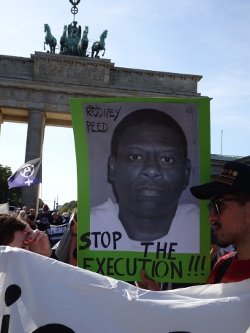 Aufgrund der erfolgreichen Verhinderung der für nächsten Dienstag angesetzten Hinrichtung von Rodney Reed, sagen wir die Kundgebung am 19.11.2019 ab. Weitere Meldungen folgen.
Am 20. November 2019 will der US Bundesstaat Texas den Gefangenen Rodney Reed nach über 20 Jahren Haft hinrichten. Verurteilt wurde er für einen brutalen Mord. Allerdings mehren sich seit Jahren die Hinweise, dass ihm dieser Mord von einem ehemaligen Polizisten aus Bastrop County in die Schuhe geschoben worden ist, der der eigentliche Mörder zu sein scheint. Jimmy Fennell, so heisst der Polizist, hatte dabei tatkräftige Unterstützung von Kollegen, dem Staatsanwalt und bis heute anhaltend von der texanischen Justiz.
Inzwischen ist klar, dass am Tatort des Mordes an Stacey Stites keine forensischen Spuren von Rodney Reed gefunden wurden, wohl aber vom Polizisten Jimmy Fennell und zwei seiner Kollegen, darunter sogar Zigarettenkippen und Bierdosen, die sie nach der Tat dort anscheinend konsumiert haben. Stacey Stites war Fennells Verlobte und hatte eine zunächst heimliche, letztendlich aber bekannt gewordene Affäre mit Rodney Reed. Inzwischen haben sich mehrere Menschen gemeldet, denen Fennell selbst erzählt hat, dass er seine ehemalige Partnerin umgebracht hat.
Fennell sass selbst 10 Jahre in Haft und kam 2018 wieder frei. Er wurde wg. Vergewaltigung im Amt verurteilt und verlor auch seinen Job als texanischer Cop. Neun ähnliche Anschuldigungen gegen ihn stehen noch immer im Raum.
Angehörige der ermordeten Stacey Stites unterstützen Rodney Reed und seine Familie in der Forderung auf Aussetzung der Hinrichtung und Freilassung. Das gleiche haben in den letzten Wochen knapp drei Millionen Menschen in einer Online Petition zum Ausdruck gebracht. Knapp 1000 Menschen demonstrierten am 9.November 2019 in Austin vor dem texanischen Justizministerium (Hier mehr...). 16 texanische Senator*innen, jeweils 8 von den Republikannern und von den Demokraten haben Gouverneur Abbott und den Begnadigungsausschuss in einem offenen Brief aufgefordert, diesen sich anbahnenden Justizmord abzusagen (Hier mehr...). Bekannte Popstars und Hip Hop Künstler*innen rufen in den USA auf, sich für Rodney Reed einzusetzen (Hier mehr...). Selbst reaktionäre Law & Order Politiker wie Ted Cruz merken, dass eines ihrer Lieblingsthemen - die Todesstrafe - durch diesen und andere bekannte Fälle in immer grössere Abneigung verfällt und fordern einen Stopp der Hinrichtung.
Trotzdem oder gerade deshalb scheint sich Gouverneur Abbott, ein enger Unterstützer von US Prsident Trump in seinem Regierungssitz einzugraben und die deutlichen Signale bis jetzt zu ignorieren. Manche befürchten, dass er die Hinrichtung gerade aus Staatsraison durchziehen könnte, wie es 2011 auch bei Troy Davis im benachbarten Georgia passiert ist, als sich Millionen von Menschen gegen dessen Hinrichtung stellten (Hier mehr...).
Momentan versucht Rodney Reeds Anwaltsteam, seinen Fall zur Anhörung vor den US Supreme Court, das höchste Gericht des USA zu bringen. Ob das die Hinrichtung verhindern oder zumindest verzögern kann, ist allerdings unklar.
Die Proteste gegen die Hinrichtung gehen weiter, auch ausserhalb der USA. In Paris, Frankfurt a.M. und Berlin sind in den kommenden Tagen Kundgebungen vor US Vertretungen angekündigt. FREE MUMIA Berlin mobilisiert am Dienstag, den 19. November, also einen Tag vor der geplanten Hinrichtung um 17 Uhr zur US Botschaft. Allerdings soll auf dem Pariser Platz an diesem Tag ein Staatsbesuch stattfinden, weshalb die Anmeldung der Kundgebung dort von der Berliner Polizei inzwischen abgelehnt wurde. Nach einigen Tagen ist jetzt klar, dass die Kundgebung zur angekündigten Termin stattfinden wird, allerdings hinter der US Botschaft:
Behrensstrasse Ecke Ebertstrasse auf dem Gehweg (mit dem Stelenfeld im Rücken).
FREE MUMIA Berlin bittet alle Leser*innen, diesen kurzfristigen Ortswechsel an alle Bekannten und interessierten Berliner*innen weiter zu geben.
DIESE HINRICHTUNG KANN VERHINDERT WERDEN!
Beteiligt euch an den Protesten und verbreitet die Informationen!
Free Rodney Reed! Abschaffung der Todesstrafe - überall!
Free Them ALL!
(Texas) Free Rodney Reed! Stoppt die Hinrichtung!
 Flyer zur Mobilisierung...
Rodney Reed, geboren am 22. Dezember 1967, ist ein Gefangener im Todestrakt, den der US-Bundesstaat
Texas am 20. November 2019 hinrichten will. Der junge Afroamerikaner wurde 1996 für den angeblich
von ihm begannenen Mord und die brutale Vergewaltigung an Stacey Stites, einer 'weissen' Frau verurteilt.
Zahlreiche Umstände sprechen jedoch dafür, dass sie von ihrem damaligen Verlobten, dem Polizisten
Jimmy Fennell ermordet wurde und dieser danach Rodney Reed unter Mithilfe seiner Kollegen selbst belastete.
Derzeit versucht Reed, vor einem Bundesberufungsgericht auf föderaler Ebene die Wiederaufnahme seines
Verfahrens zu erkämpfen. Aus Angst vor einer erneuten juristischen Auseinandersetzung hat der Bundesstaat
Texas eine Hinrichtung für den 20. November angesetzt. Bereits 2015 scheiterte der Bundesstaat aufgrund
länderübergreifender Proteste mit dem staatlichen Mordversuch an Reed. Nun sieht es jedoch wieder
sehr bedrohlich für ihn aus. Todesstrafengegner*innen rufen daher zu Notfallprotesten gegen seine
Hinrichtung auf
(Hier mehr...).
Hintergrund - Vergewaltigung und Mord an Stacey Stites:
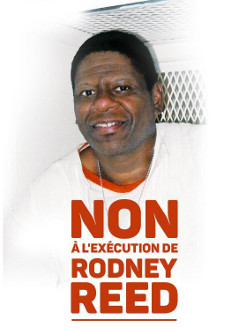 Stacey Stites war die Lebenspartnerin des Polizisten Jimmy Fennell. Dieser bedrohte sie, dass er sie
töten würde, wenn sie „fremd ginge“. Es gab im damaligen Prozess viele Zeugenaussagen, die
bestätigen, dass Stites eine heimliche Liebesbeziehung mit Rodney Reed hatte und sie sich aus Angst
vor ihrem Verlobten, dem Polizisten Fennell, nicht von ihm trennte. Spätere DNA-Untersuchungen haben
ergeben, dass die zunächst belastenden Spermafunde von Rodney Reed von einem gemeinschaftlichen
Liebesakt stammen, der viele Stunden vor ihrer Vergewaltigung und Ermordung stattfand. Weitere DNA-Funde
belegen inzwischen die Anwesenheit von Freunden und Kollegen Jimmy Fennells (alle ebenfalls Polizisten)
am Tatort der Ermordung von Stacey Stites. Als Rodney Reed bereits 2015 hingerichtet werden sollte, brachen
weitere Opfer des Polizisten Fennell ihr Schweigen. Sie erzählten ihre Leidensgeschichten mit dem
Polizisten und setzten sich für Rodney Reed ein. Zu seinen Unterstützern zählt auch die
Familie von Stacey Stites. Der Polizist Fennell sass wegen Vergewaltigung im Amt in einem anderen Fall bis
2018 in Haft. Zehn weitere Frauen haben ihn sexueller Gewalt beschuldigt.
Stacey Stites war die Lebenspartnerin des Polizisten Jimmy Fennell. Dieser bedrohte sie, dass er sie
töten würde, wenn sie „fremd ginge“. Es gab im damaligen Prozess viele Zeugenaussagen, die
bestätigen, dass Stites eine heimliche Liebesbeziehung mit Rodney Reed hatte und sie sich aus Angst
vor ihrem Verlobten, dem Polizisten Fennell, nicht von ihm trennte. Spätere DNA-Untersuchungen haben
ergeben, dass die zunächst belastenden Spermafunde von Rodney Reed von einem gemeinschaftlichen
Liebesakt stammen, der viele Stunden vor ihrer Vergewaltigung und Ermordung stattfand. Weitere DNA-Funde
belegen inzwischen die Anwesenheit von Freunden und Kollegen Jimmy Fennells (alle ebenfalls Polizisten)
am Tatort der Ermordung von Stacey Stites. Als Rodney Reed bereits 2015 hingerichtet werden sollte, brachen
weitere Opfer des Polizisten Fennell ihr Schweigen. Sie erzählten ihre Leidensgeschichten mit dem
Polizisten und setzten sich für Rodney Reed ein. Zu seinen Unterstützern zählt auch die
Familie von Stacey Stites. Der Polizist Fennell sass wegen Vergewaltigung im Amt in einem anderen Fall bis
2018 in Haft. Zehn weitere Frauen haben ihn sexueller Gewalt beschuldigt.
Hintergrund - Die Todesstrafe: rassistisches und klassistisches Ordnungsinstrument
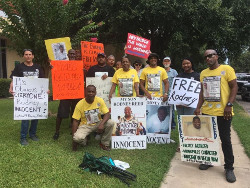 Rodney Reed ist einer von über 3000 Gefangenen in US-Todestrakten, die kaum eine Chance auf einen
fairen Prozess hatten, weil sie sich selbst keine qualifizierte Verteidigung leisten konnten. Texanische und
föderale Gerichte lehnten Anträge von Rodney Reed auf forensische Untersuchungen der Tatumstände
wiederholt ab. Trotzdem wartet ein weiterer Antrag von Reed vor einem föderalen Gericht, der viele neue
Beweise enthält. Aus Angst vor einer möglichen Neuverhandlung hat der Bundesstaat Texas nun jedoch
erneut eine Hinrichtung angesetzt: am 20. November 2019. Rodney Reeds Behandlung durch die lokale Polizei und
Justiz ist die in Teilen der USA anhaltende Lynchmenatlität gegen People Of Color. Historische Fälle
wie der Scottsboro Boys(1) oder auch in jüngerer Geschichte die Central Park 5(2) sind mit diesem Fall
vergleichbar.
Rodney Reed ist einer von über 3000 Gefangenen in US-Todestrakten, die kaum eine Chance auf einen
fairen Prozess hatten, weil sie sich selbst keine qualifizierte Verteidigung leisten konnten. Texanische und
föderale Gerichte lehnten Anträge von Rodney Reed auf forensische Untersuchungen der Tatumstände
wiederholt ab. Trotzdem wartet ein weiterer Antrag von Reed vor einem föderalen Gericht, der viele neue
Beweise enthält. Aus Angst vor einer möglichen Neuverhandlung hat der Bundesstaat Texas nun jedoch
erneut eine Hinrichtung angesetzt: am 20. November 2019. Rodney Reeds Behandlung durch die lokale Polizei und
Justiz ist die in Teilen der USA anhaltende Lynchmenatlität gegen People Of Color. Historische Fälle
wie der Scottsboro Boys(1) oder auch in jüngerer Geschichte die Central Park 5(2) sind mit diesem Fall
vergleichbar.
 Der entschlossene Widerstand vieler Menschen gegen die rassistische und tödliche Polizeigewalt hat
seit dem Aufstand von Ferguson 2014 erneut ein Licht auf den Umgang mit People of Color in den USA geworfen.
Eine Allianz aus straffrei agierender Polizei und voreingenommener Klassenjustiz sichert den ständigen
Zustrom von Gefangenen an die Fliessbänder der US-Gefängnisindustrie. Um Staatsraison und Angst
unter den Armen und Nichtweissen aufrecht zu erhalten, werden deshalb alle paar Wochen u.a. Angehörige
dieser Minderheiten staatlich sanktioniert ermordet.
Der entschlossene Widerstand vieler Menschen gegen die rassistische und tödliche Polizeigewalt hat
seit dem Aufstand von Ferguson 2014 erneut ein Licht auf den Umgang mit People of Color in den USA geworfen.
Eine Allianz aus straffrei agierender Polizei und voreingenommener Klassenjustiz sichert den ständigen
Zustrom von Gefangenen an die Fliessbänder der US-Gefängnisindustrie. Um Staatsraison und Angst
unter den Armen und Nichtweissen aufrecht zu erhalten, werden deshalb alle paar Wochen u.a. Angehörige
dieser Minderheiten staatlich sanktioniert ermordet.
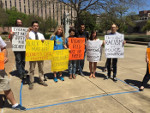 Kein Staat hat das Recht Menschen zu töten, weder durch Militär, Polizei oder die Todesstrafe!
Deshalb: #dontshoot #wecantbreathe und Abschaffung der Todesstrafe - überall!
 Schreibt Rodney Reed und zeigt ihm Eure Solidarität!
Rodney Reed; #999271
Polunsky Unit Death Row
3872 FM 350 South Livingston
Texas 77351
USA

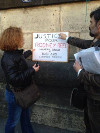
Solidaritätskundgebung mit Rodney Reed am Dienstag, 19. November 2019 um 17 Uhr vor der US Botschaft in Berlin:
US Botschaft
Pariser Platz/Brandenburger Tor
10117 Berlin-Mitte, U+S-Brandenburger Tor
ACHTUNG neuer Ort: Ebertstr./Behrenstr. ggü. Der US-Botschaft, auf dem dortigen Gehweg
Free Rodney Reed! Stoppt die Hinrichtung - Abschaffung der Todesstrafe - überall! Scottsboro Boys - (Encyclopadia Alabama) Scottsboro Trials
& A digital exhibit by the Scottsboro Boys Museum & Cultural Center and the University of Alabama - To See Justice Done: Letters from the Scottsboro Boys Trials I'm one of the Central Park Five. Donald Trump won't leave me alone (2016)
& The Interview - Do police interrogation techniques produce false confessions?
Innocence Project fears Texas may execute Rodney Reed, an innocent person
Read more...
(The Guardian) Washington state's supreme court strikes down death penalty (October 11, 2018)
Weiter lesen...
(Spiegel) Im Todestrakt: Hank Skinner
Video ansehen...
Erfolgreicher Widerstand gegen die Todesstrafe in den USA
Amnesty International veröffentlichte im April
einen globalen Report
über die Todesstrafe, demzufolge die Anzahl der Hinrichtungen 2016 im
Vergleich zum Vorjahr deutlich zurück gingen.
Zum ersten Mal seit 2006 sind die USA nicht mehr unter den Top-Fünf,
sondern mit "nur" 20 Hinrichtungen im Jahr 2016 derzeit auf Rang sieben
der weltweiten Henker*innen-Staaten.
Das ist die niedrigste Zahl an
Hinrichtungen in den USA seit knapp 3 Jahrzehnten.
Allerdings ist der globale Kampf gegen die Todesstrafe trotz des Rückgangs 2016 auch in den
USA noch lange nicht gewonnen.
Glücklicherweise konnten die für diesen Monat geplanten Hinrichtungen in Arkansas bis jetzt verhindert werden.
How Donald Trump Could Revitalize The Death Penalty
(Death Penalty News) How Donald Trump Could Revitalize The Death Penalty (November 12, 2016)...
The Death Penalty Won Big on Election Day, But the Devil Is In the Details
(The INTERCEPT) The Death Penalty Won Big on Election Day, But the Devil Is In the Details (November 11, 2016)...
Jimmy Dennis: Todestraktgefangener gewinnt En-Banc Entscheidung in Pennsylvania - Freiheit möglich
Gute Nachrichten aus dem Todestrakt in Pennsylvania:
Der ohne Beweise verurteilte Gefangenen Jimmy Dennis, ehemaliger Mitgefangener von Mumia Abu-Jamal, hat am 23. August 2016 eine En-Banc Entscheidung mit neun zu vier Stimmen gewonnen: Mehr lesen...
Damit wurde eine Entscheidung von Richterin Brody aus dem August 2013 bestätigt, die besagt, dass Jimmy Dennis unschuldig an dem Mord von Cheddell Williams 1991 sei und deshalb sein Todesurteil aufzuheben und seine Freilassung anzuordnen sei.
Philadelphias durch einen Untreue-Skandal angeschlagener Bezirksstaatsanwalt Seth Williams hat nun 90 Tage Zeit, einen Einspruch gegen diese En-Banc Entscheidung einzulegen. Es handelt sich hier um den gleichen Staatsanwalt, der bei seinem Amtsantritt öffentlich feststellte, dass er von Hunderten, wenn nicht Tausenden unschuldig Verurteilter in seinem Bezirk ausgehe und eine (bisher zumindest nicht öffentlich in Erscheinung getretene) Kommission zur Prüfung von Einzelfällen einrichten wolle.
Williams ist auch der Staatsanwalt, der im Dezember 2011 die Forderung nach Hinrichtung von Mumia Abu-Jamal zurückzog und auf eine lebenslange Haft ohne Möglichkeit der Entlassung gegen den Journalisten drang, dem im Sommer 2012 von Richterin Lynne Abraham stattgegeben wurde.
Wenn Williams nun seinen aussichtslosen Kampf um die Hinrichtung von Jimmy Dennis endlich aufgibt, könnte der unschuldig verurteilte Gefangene nach 25 Jahren Folter im Todestrakt endlich freigelassen werden.
Unterstützt die Kämpfe der Gefangenen in den USA - z.B. auf der Kundgebung am 29. Oktober 2016 (kurz vor den US-Präsidentschaftswahlen) um 15 Uhr vor der US-Botschaft in Berlin.
Abschaffung der Todesstrafe - ÜBERALL!
Free Mumia - FREE THEM ALL!
Kalifornien: Kevin Cooper droht Hinrichtung trotz gerichtlich anerkannter Unschuld
Kevin Cooper im kalifornischen Todestrakt ist faktisch unschuldig, vermuten zuständige Richter. Trotzdem wollen sie ihn aus juristischen Verfahrensgründen hinrichten lassen. Ein Termin für die Exekution kann bald kommen. Bitte macht den Fall bekannt und unterzeichnet auch folgende Online Petition an den Gouverneur von Kalifornien, Kevin Cooper freizulassen:
Todesstrafe: Nach Nebraska, Delaware auf dem richtigen Weg (21.05.2015)
Abschaffung der Todesstrafe in Delaware möglich
Im US-Bundesstaat Delaware hat der Senat sich in einer Abstimmung mit 11 zu 9 Stimmen gegen die Todesstrafe
ausgesprochen. Kurz nach dem US-Bundesstaat Nebraska könnte nun auch in Delaware diese Strafe bald
Vergangenheit zu sein.
32 Todesurteile falsch?: Entsetzlicher Skandal beim FBI - Offensichtlich Unschuldige in den USA hingerichtet! (20.04.2015)
Wie die Washington Post berichtet, ist es zu fatalen kriminaltechnischen Fehlern gekommen. Vor allem Haaranalysen seien oft falsch gewesen. Dadurch trage das FBI eine grosse Mitschuld an Hinrichtungen und Fehlurteilen gegen mehrere Hundert Angeklagte.
Midazolam: A True Story
Der Oberste Gerichtshof der USA erwägt derzeit, ob das in Oklahoma in
mehreren verpfuschten Hinrichtungen verwandte Präparat Midazolam
zulässig sei. Nun steuert der Todestrakt Überlebende Ron Keine eine
einzigartige und erschütternde Erfahrung zur Diskussion bei.
Vorsicht: Triggerwarnung!
Midazolam: A True Story...
By Ron Keine
Pennsylvania: Todestraktgefangener Jimmy Dennis bald frei?
Die gleiche Frage stellte ich bereits im August 2013, als eine Richterin in Pennsylvania (USA) das Todesurteil gegen den seit 1991 inhaftierten Musiker Jimmy Dennis aufhob. Allerdings liess es sich die Law And Order Fraktion des Bundesstaates wie in so vielen anderen Fällen auch nicht nehmen, Berufung gegen den errungenen Sieg eines Gefangenen einzulegen.
Der Todestrakt Gefangene Jimmy Dennis wahrte sich nun entgegen einer weiteren Ablehnung aus dem Februar 2015 die Chance auf Freilassung. Das föderale 3. Bundesberufungsgreicht hat am 7. Mai 2015 "En Banc" entschieden, sich erneut mit seinem Fall zu befassen.
Todesstrafe - Terrorinstrument des Staates
Free Mumia Berlin
Anfang Februar 2015 sorgte die Nachricht vom zeitweiligen Aussetzen der Todesstrafe im US Bundesstaat Pennsylvania für grosse Freude unter Gefangenen, Angehörigen und Unterstützer*innen. Pennsylvania gehört damit (zur Zeit) zu den 20 US Bundesstaaten, die keine Gefangenen ermorden. In einigen linken Medien gab es aus diesem Anlass Berichte (1) und Analysen. Allerdings setzte sich unserer Beobachtung nach niemand mit der Todesstrafe an sich und ihrer Funktion in einer kapitalistischen Demokratie wie den USA auseinander. Dies wollen wir im folgenden nachholen.
Aussetzung der Todesstrafe in Pennsylvania - ein Kommentar
In der vergangenen Woche setzte der neu gewählte Gouverner Tom Wolf die Todesstrafe in Pennsylvania, USA aus. Er möchte zunächst umfassende Erkenntnisse einholen, bevor er - anders als sein Vorgänger - weitere Hinrichtungsbefehle unterzeichnet.
Die FREE MUMIA Bewegung hat immer die Abschaffung der Todesstrafe gefordert und auf den Rassismus und die Klassenjustiz aufmerksam gemacht, die in dieser Thematik eine Rolle spielen. In seiner öffentlichen Erklärung geht Gouverneur Wolf auf diese und andere Faktoren ein. Allerdings deuten sich bereits jetzt Reformvorschläge an, die Angeklagten und Gefangenen weiterhin keine Chance lassen werden, sondern eher das ramponierte Image der Justiz verbessern sollen.
Ein Kommentar von Radio Aktiv Berlin: Audio - 05:45 min...Zwei Texte, die in dem Kommentar zitiert werden:
"Death Penalty Moratorium Declaration" von Pennsylvanias Gouverneur Tom Wolf - Februar 2015...US Bundesrichter Jed S. Rakoff, November 2014: "Why Innocent People Plead Guilty"...
Gefangene klagen gegen anonyme Hinrichtungen im US Bundesstaat Ohio
Der US Bundesstaat Ohio verabschiedete im November 2014 ein Gesetz, das allen an Hinrichtungen beteiligten Wärter*innen, Ärzt*innen etc. Anonymität zusichert.
Ähnlich wie Gefangene in Pennsylvania sich derzeit juristisch gegen das dortige Gefangenen-Knebel-Gesetz wehren, haben vier Todestrakt Insassen in Ohio nun Klage eingereicht.
NOV 24 - Twitter storm for Rodney Reed
Rodney Reed is facing execution on January 14, 2015 for a crime he didn't commit. Join us on November 24 to help raise awareness about his wrongful conviction: tweet & retweet case information, links to documentaries, articles and anything else related to Rodney's case using hashtags #RodneyReed #wrongfulconviction #deathpenalty #innocence ... Let's flood Twitter with Rodney's name so more people become aware of this miscarriage of justice.
Sample tweets
#Texas framed an innocent man http://vimeo.com/98846490 Time is running out, #execution Jan. 14 #RodneyReed #wrongfulconviction #deathpenalty
#Wrongfulconviction of #RodneyReed: State Vs Reed http://youtu.be/gWfAMuPZCf0 #Execution Jan.14, 2015 #deathpenalty #innocence #Texas
Full case files and evidence in the #RodneyReed #wrongfulconviction case http://rodneyreedfulltruth.com/ #deathpenalty
#Bastrop, #Smithville & #Giddings, have info re #RodneyReed case? Now is the time to come forward http://youtu.be/kE5StJAISfc #wrongfulconviction
Holes in the #RodneyReed case http://on.fb.me/1xj3Oxu #wrongfulconviction #deathpenalty
#Wrongfulconviction of #RodneyReed: Is #Texas Getting Ready to Kill An Innocent Man? http://bit.ly/1xICI1P #Execution Jan.14 #deathpenalty
#RodneyReed, The Next #TroyDavis? http://youtu.be/ecQ5Tt--UJ0 #Execution Jan. 14 #wrongfulconviction #Texas
#Wrongfulconviction of #RodneyReed: interview from #Texas #deathrow http://bit.ly/1uz1QIz# Execution Jan. 14 #SaveRodneyReed #deathpenalty
#Wrongfulconviction of #RodneyReed: Who Killed Stacey Stites? http://bit.ly/1jxnw0v #deathpenalty #Bastrop
#Wrongfulconviction of #RodneyReed: 'Somebody's Got to Pay' http://bit.ly/1k2Zd9M #Execution on January 14, 2015 #deathpenalty #Texas
#Wrongfulconviction of #RodneyReed: Another Innocent Man on #Texas' #DeathRow? http://bit.ly/1qOLw1g #Execution Jan.14 #deathpenalty
Medical Examiner: Testimony Misconstrued in #RodneyReed Case http://bit.ly/11djE0a #wrongfulconviction #deathpenalty #SaveRodneyReed
Rape Victim Believes #DeathRow Inmate #RodneyReed Is Innocent http://bit.ly/1qOHmWX #wrongfulconviction
#Wrongfulconviction of #RodneyReed: Woman Raped by #Texas Cop Believes Wrong Man on #DeathRow http://youtu.be/Y_W8szly7S0 #Execution on Jan. 14
Jimmy Fennell has a frightening history of violence against women - yet he's not the one on #deathrow http://bit.ly/1ulnEG3 #RodneyReed
(Oklahoma, USA) Politiker fordert Stickstoff statt Todesspritze (24.09.2014)
Still seeking justice for Rodney Reed
The state of Texas has set an execution date for an innocent man, but Rodney Reed's family and supporters are on the march. (July 28, 2014)
THE FAMILY and supporters of Texas death row prisoner Rodney Reed left a July 24 rally at the Bastrop County Courthouse with buoyed hopes and renewed optimism that justice is possible for this innocent man.
Todesstrafe USA: aktuelle Entwicklungen (21.07.2014)
In der vergangenen Woche sorgten Schlagzeilen vom Ende der Todesstrafe im US Bundesstaat Kalifornien für Aufsehen. Richtig ist, dass ein kalifornisches Gericht mit Verweis auf den 8. Verfassungszusatz der USA, der "grausame und ungewöhnliche Strafen" verbietet, die selbe für verfassungswidrig eingestuft hat. Begründet wurde dies mit der extrem langen Zeit, die Verurteilte in der Isolation der Todestrakte verbringen. Der afroamerikanische Journalist Mumia Abu-Jamal kommentierte das am 20. Juli vor dem Hintergrund seiner eigenen Erfahrungen von knapp 30 Jahren Todestrakt (Mehr hier...)
Nur ist derzeit noch überhaupt nicht klar, ob sich bundesstaatliche und föderale Berufungsgerichte dieser Argumentation anschliessen, die im Falle der Zustimmung natürlich weit über Kalifornien hinaus Bedeutung hätte.
Todesstrafe USA - neue Entwicklungen
In dieser Woche gab es in den USA mehrere einschneidende Entwicklungen im Kampf um die Abschaffung der Todesstrafe.
Während die erste Hinrichtung einer weiblichen Gefangenen in Mississippi seit 70 Jahren (1) zunächst abgesetzt wurde, erlitten die Bundesstaaten Texas und Oklahoma ernste juristische Niederlagen. Sie wurden gerichtlich verpflichtet, ihre Lieferanten öffentlich zu benennen, von denen sie in der jüngeren Vergangenheit Chemikalien für Hinrichtungen erworben haben.
Texas - neues über Hank Skinners Kampf gegen die Lynchjustiz
Einige erinnern sich bestimmt noch an unseren Flyer aus dem Herbst 2011
über Hank Skinner, einen Todestraktgefangenen aus Texas, der
höchstwahrscheinlich faktisch unschuldig ist und von der Hinrichtung
bedroht ist
Mehr hier...
Der Staat von Texas hat sich trotz massiver Zweifel an der Beweiswürdigung im ursprünglichen Jury Verfahren geweigert, die notwendigen finanziellen Mittel für eine erneute Untersuchung aller noch vorhandenen Beweise zur Verfügung zu stellen.
Nun gibt es Neuigkeiten
Hier...
Hank Skinner war schwer krank und wäre in den letzten Monaten beinahe in Haft gestorben, weil er im Todestrakt keine angemessene Gesundheitsversorgung erhalten hat.
Die gute Nachricht ist, dass es dank der zahlreichen Spenden (zu denen wir damals - im Herbst 2011 - auch euch aufgerufen hatten) wirklich einen DNA Test gab, der also privat gezahlt werden musste.
Am 3. und 4. Februar 2014 wird es eine lang erwartete gerichtliche Anhörung geben, die abschliessend darüber entscheiden wird, ob es ausreichend neue Beweise gibt, die ein neues Verfahren für Hank Skinner ermöglichen.
Für diese Anhörung brauchen Hank Skinners Unterstützer*innen weitere 15.000 US, um zwei Expert*innen engagieren zu können, die die DNA Ergebnisse wissenschaftlich vor Gericht einordnen können.
Bitte verbreitet den Spendenaufruf der Unterstützer*innen von Hank Skinner weiter und helft mit, einen Todestrakt Kandidaten ohne eigene Mittel gegen die Klassenjustiz der Todesstrafe in den USA zu verteidigen, die Angeklagten keine ausreichenden Mittel für eine Verteidigung bereit stellt, sich aber das Recht heraus nimmt, Gefangene zu ermorden.
Weg mit der Todesstrafe - überall!
USA: Todestraktgefangener bald frei?
Vor wenigen Tagen entschied eine Richterin in Philadelphia, dass der Afroamerikaner Jimmy Dennis 1992 ohne überzeugende Beweise zum Tode verurteilt wurde und hob das Urteil auf. Er ist seit 1992 im Todestrakt. Entweder muss nun innerhalb von sechs Monaten ein erneutes Verfahren durchgeführt werden, oder der Gefangene entlassen werden.
Der Albtraum begann für den Gospel Musiker Jimmy Dennis vor über 21 Jahren, als er im USA Bundesstaat Pennsylvania verhaftet und des Mordes an Chedell Williams beschuldigt wurde. Chedell Williams war Opfer eines brutalen Raubmordes in der Fern Rock U-Bahn Station von Philadelphia geworden. Die Teenagerin hatte sehr teure Ohrringe getragen und war von zwei bis heute unbekannten Männern niedergeschossen worden, die mit ihren Ohrringen und einem dritten Komplizen in einem Auto entkamen.
Pressemitteilung von Reprieve: British firm supplying execution drugs to US
Reprieve + 44 (0) 207 553 8166 FOR IMMEDIATE RELEASE (Wed 15 May 2013)
A UK-headquartered company is supplying lethal injection drugs to Arkansas Death Row, it has emerged.
The US state recently announced that it was moving to a new execution drug, called phenobarbital, after supplies of previously-used drugs were shut off by companies which did not want to see their products used to execute.
It has since been revealed that Arkansas Department of Corrections (DoC) obtained the phenobarbital from West-Ward pharmaceuticals, a wholly-owned subsidiary of Hikma plc, which has its headquarters in London.
Recent moves by a number of global pharmaceutical companies – including Lundbeck, Fresenius Kabi, Teva and Hospira – to restrict the supply of a number of barbiturates in order to prevent their use in executions has left prisons in the US struggling to find the means by which to carry out the death penalty.
However, despite being warned by human rights charity Reprieve that their drugs are being used in this way, neither parent company Hikma nor West-Ward have yet followed the example of their competitors in taking concrete steps to restrict supply.
Arkansas is the first – and so far, the only – state to switch to phenobarbital, which has not previously been used in executions. Papers filed with courts in the US have pointed out that the untested nature of the drug in this context may result in prisoners not necessarily being killed but instead left in a “vegetative state” or with “devastating injuries that will cause prolonged suffering.”
Maya Foa, Deputy Head of Reprieve’s Death Penalty Team said: “It’s very disappointing to see a British firm fuelling executions in the USA. Hikma claims to be ‘committed to improving people’s lives’ yet the firm is apparently happy for its drugs to be used in the potentially torturous executions of prisoners in the USA. This callous indifference to the suffering of prisoners and disregard for corporate social responsibility is all the more surprising in light of the ethical steps taken by other manufacturers implicated in the execution drug trade. Hikma knows that it can prevent its drugs from being used to kill, just as other firms have done, yet it is choosing to do nothing. If no action is taken, Hikma may soon become the prime provider of execution drugs across the USA.”
ENDS
Notes to editors
- For further information, please contact Donald Campbell in Reprieve’s
press office: +44 (0) 7791 755 415 / (0) 207 553 8166 /
donald.campbell@reprieve.org.uk
- Papers filed with the Arkansas Circuit Court warn about the potential impact of using phenobarbital in executions in the manner proposed by Arkansas DoC – see especially pars 51-3.
- Arkansas Department of Correction has publicly announced that it has
acquired a supply of phenobarbital and intends to use it to kill
prisoners: “Department of Correction spokeswoman Shea Wilson told The
Associated Press on Wednesday that the agency spent about $20,000 to buy
lorazepam and phenobarbital, even though phenobarbital apparently hasn't
been used in a U.S. execution before and lawyers for some death row
inmates say it may be unsuitable for that purpose […] ‘The phenobarbital
would be the one that would kill them,’ Wilson said.’ (‘Arkansas has
enough drugs to carry out executions,’ Associated Press, 17 April 2013)
Arkansas DoC obtained the supply of phenobarbital from a company called West-Ward Pharmaceuticals (‘Arkansas turns to different lethal injection drug,’ Associated Press, 19 April 2013)
West-Ward is a wholly-owned subsidiary of UK-Headquartered firm Hikma. See: http://www.hikma.com/about-hikma/our-history.aspx Companies House lists Hikma Pharmaceuticals PLC as being headquartered at 13 Hanover Square, London. - Hikma’s AGM is on Thursday 16 May.
- Reprieve, a legal action charity, uses the law to enforce the human rights of prisoners, from death row to Guantánamo Bay. Reprieve investigates, litigates and educates, working on the frontline, to provide legal support to prisoners unable to pay for it themselves. Reprieve promotes the rule of law around the world, securing each person’s right to a fair trial and saving lives. Clive Stafford Smith is the founder of Reprieve and has spent 25 years working on behalf of people facing the death penalty in the USA.
Hank Skinner: 6 Wochen für forensisches Gutachten!
Während der amerikanische US-Bundesstaat Texas bereits mehr als 100.000 Dollar zur Durchführung der Hinrichtung ausgegeben hat, fehlen Hank 17.000 Dollar zur Durchfährung eines DNA-Tests, der seine Unschuld belegen soll.
Can you spend $10 to save a life? - January 10, 2013
Das bundesweite free-Mumia Netzwerk in einem Flyer vom Herbst hierzu...
Spendenappell um Hank Skinner's Leben zu retten
Ihr Lieben Alle,
zum Beginn des neuen Jahres möchte ich Euch ein Update zu meinem Fall und zum jetzigen Stand der DNA-Test-Prozedur geben.
Ihr wisst vielleicht, dass wir im September 2011 einen neuen Antrag zum DANN-Test gestellt haben, nachdem wir letztes Jahr einen wichtigen Sieg beim Obersten Gerichtshof der USA errungen hatten. Der Antrag wurde vom Richter abgelehnt, und im Mai 2012 wurde zu diesem Thema ein Plädoyer im Berufungsgericht gehalten. Die Reaktionen der Richter und die gestellten Fragen zeigten, dass die Argumentation zu unseren Gunsten verlief, und noch bevor das Gericht eine Entscheidung fällte, zog der Staat Texas seinen Widerspruch gegen den DANN-Test zurück. Anschließend wurde sowohl vom Generalstaatsanwalt als auch von meinen Anwälten eine gemeinschaftliche Vereinbarung unterzeichnet, 40 Beweisstücke zu testen.
Durch die Testergebnisse aller bisherigen Beweisstücke haben wir ein unvollständiges DNA-Profil einer dritten Person herausgearbeitet. Das betrifft den Griff des Messers, von dem der Staat sagt es sei eine Mordwaffe, und den Blutfleck vom Teppich des hinteren Schlafzimmers, der eine Mischung von Scooters und Randy's Blut, vermischt mit dem einer dritten Person, ist. Da dies kein vollständiges Profil ist, werden momentan weitere Tests durchgeführt, um das Profil zu erweitern und durch die landesweite DNA-Datenbank laufen zu lassen.
Bisher hat der Staat mehr als 100.000 Dollar ausgegeben um zu beweisen, dass ich schuldig bin, aber das hat überhaupt nicht funktioniert, weil ich unschuldig bin.
Die gute Nachricht ist, dass sich auf keinem der Opfer mein Blut befindet, jedoch das eines anderen. Auf den Möbel und inneren Türrahmen und anderen Gegenstände, auf die ich geblutet habe/ oder auf denen mein blutiger Handabdruck oder Fingerabdrücke zu finden sind, befindet sich nur mein Blut. Am wichtigsten ist, dass auf den Hintertüren und zwei Türgriffen nur meine blutigen Handabdrücke zu finden sind. Es ist bekannt, dass dies die letzten Dinge waren, die ich berührt hatte, als ich aus diesem Haus taumelte. Das Blut der Opfer ist nicht an meinen Händen.
Unglaublicherweise versucht der Staat zu behaupten, die Tatsache, dass ich vor Ort war und dass ich im Schlafzimmer blutete, würde bedeuten, dass ich schuldig bin. Pech für den Staat, dass diese Position vollkommen unhaltbar ist. In Texas gilt nach maßgeblichen Präzedenzfällen die auf solche Situationen anwendbar sind, die bloße Anwesenheit nicht als Schuldbeweis.
Der Beweisspurenbericht der Analyse der Haare, die Twilas Hände "umklammerten" zeigen mehrere Haare, die sich von den Proben der Haare der Opfer und von mir unterscheiden. Außer den Tests, die gerade durchgeführt werden, benötigen wir Mitochondrien-DNA-Tests dieser Haare und möglichst Tests an den Proben, die in der ersten Testrunde das unvollständige Profil einer dritten Person am Tatort zeigten. Solche Mitochondrien-Tests können uns helfen, die Identität des Ursprungs dieser DNA zu beweisen. Der Staat hat das Interesse an weiteren DNA-Tests verloren und geschworen nicht für weitere DNA-Tests zu zahlen.
Innerhalb einer kurzen Zeitspanne müssen wir 17.000 Dollar sammeln, um die Mitochondrien-Tests zu beenden und um die Ausgaben zu decken. Wir haben sechs bis acht Wochen Zeit, um das zu erreichen, und ich brauche dafür wirklich Eure Hilfe und Unterstützung. Dies ist meine letzte Chance, meine Unschuld zu beweisen und aus diesem Alptraum entlassen zu werden.
Für das neue Jahr wünsche ich Euch und Euren Lieben das Allerbeste. Ich danke Euch für alles, was Ihr für mich getan habt, und am meisten für Eure fortdauernde Unterstützung dabei, die Wahrheit nachzuweisen und meine Unschuld zu beweisen.
Mit herzlichen Grüßen
Hank Skinner
Why did death penalty repeal fail in California?
By Lily Hughes
Proposition 34 (or the SAFE Act), the ballot measure that would have replaced the death penalty in California with life without parole (LWOP), was narrowly defeated there on November 6, 2012. A de facto moratorium remains in place as the courts in California continue to wrestle over the state's execution protocol.
53% of people voted against the measure, with 43% voting in favor. This is a far cry from the 70% of people that were in favor of reinstating the death penalty in California in 1978. The significant shift in public opinion against the death penalty is incredibly encouraging for abolitionists both nationally and in California.
At the same time that Californians voted to keep the death penalty, a larger percentage of them also voted to reduce the harshest punishments associated with the "three strikes" law.
With the clear and significant decline in support of the death penalty in California, and with voters choosing to soften the harsh penalties in "three strikes" law, what caused the SAFE Act to fail?
(Texas) Stoppt die Hinrichtung von Preston Hughes III - Hinrichtungsdatum 15. November 2012
Unterschreibt seine Petition, verbreitet sie weiter und helft mit,
diesen staatlich angekündigten Mord zu verhindern!
Hier...
(Death Penalty, Texas - US) No use for public transperancy...
"Execution changes occur without public scrutiny, input"
(Texas, USA) Song über den Todestrakt Gefangenen Rob Will, USA
STEFAN SAFFER - "When justice walks on death row" (Rehearsal-Demo)
(Pennsylvania, USA) Free Jimmy Dennis, Innocent on Death Row
Commentary: Mumia Was Spared, but a Brutal Practice Continues
3. Oktober 2012: Stoppt die Hinrichtung von Terry Williams!
Online Unterschriften Aktion an den Gouverneur von Pennsylvania gegen die Hinrichtung von Terry Williams:
Take Action...
Mumia Abu-Jamal: Rede für "Butter"
Der Name auf seinem Hinrichtungsbefehl ist "Terrance Williams", aber das ist nicht sein Name. Der ist Terry Williams. Und irgendein Beamter, ein Staatsanwalt vielleicht, beschloss, daraus "Terrance" zu machen, und so nennt man ihn jetzt.
Der Mann, den ich kenne, Terry, war noch nicht einmal alt genug, sich zu rasieren, als er, im Alter von 18 Jahren, in den Todestrakt kam. Er war ein intelligenter, enthusiastischer junger Mann, der an mit einen anderen jungen Mann geraten war, einen Partner, der den besonderen Vorteil hatte, Sohn eines Polizeibeamten zu sein, und der daher wusste, wie man sich aus der Affäre zieht.
Er sagte gegen Terry aus, im Austausch für ein Urteil auf Lebenslänglich und eine mögliche spätere Verkürzung der Haftzeit. Ausserdem bog Terrys Mitangeklagter seine Zeugenaussage zurecht, um dem Staatsanwalt zu helfen, und er bestritt, dass er mit diesem einen Handel abgeschlossen hatte.
Aber die meisten Leute kannten Terry als "Butter", wegen seiner geschmeidigen Spielweise auf dem Footballfeld, als er noch Top-Athlet an der Highschool war. Die, die ihn Football spielen sahen, sahen die Geburt eines Profisportlers, aber das sollte nicht sein. Als Jugendlicher hatte "Butter" ein Geheimnis, über das man nicht mit andern Männern spricht, besonders nicht mit anderen Gefangenen.
Er wurde als Heranwachsender sexuell missbraucht, und einer der Täter war dann das Opfer des Verbrechens, das Terry in den Todestrakt brachte und wegen dem ihm jetzt in einigen Wochen die Hinrichtung droht. Sein Mitangeklagter wusste von dem Missbrauch, folgte aber offenbar einem Rat, im Zeugenstand nichts davon zu sagen.
Jetzt, wo "Butter" um sein Leben kämpft, kommen einige Tatsachen ans Licht, die seine Behauptungen stützen. Aber was am überraschendsten ist, ist das Schweigen der Vertreterinnen und Vertreter der Bewegung gegen die Todesstrafe. Wo sind sie? Warum hören wir nichts von ihnen?
*/Aus der Nation der Gefangenen/*
*/Mumia Abu-Jamal/*
Mumias Radiobeitrag kann hier im Original gehört werden.
Vielen Dank an den Übersetzer
Artikel in der Tageszeitung Junge Welt dazu: Kampf gegen Todesspritze
Achse der Henker - Bericht zur Todesstrafe 2011
Vor wenigen Tagen legte Amnesty International ihren Jahresbericht zur Todesstrafe 2011 vor.
Todesstrafe USA - Suche nach Gift geht weiter
Im Dezember 2011 verhängte die EU Komission ein Ausfuhrverbot für das
Präparat Natrium Thiopental, um europäischen Firmen Profite an der
Todesstrafe in den USA zu verunmöglichen. Der bisherige Hauptexporteur,
der dänische Pharma-Konzern Lundbeck verkaufte nun seine Patente und
erzielte einen hohen Gewinn vor dem Hintergrund der Suche von US
Bundesstaaten, Gefangene mit dem gesetzlich vorgeschriebenen
3-Gifte-Cocktail umzubringen. weiterlesen...
Upcoming Scheduled Executions in Texas
Upcoming /Scheduled Executions in Texas /By Texas Moratorium Network
To express your opposition to any execution, you can contact Governor Rick Perry's office at 512 463 2000. If you call after business hours, you can leave a voice mail message. During business hours, someone should answer the phone. You can also send a message using a form on Perry's official website
Read the whole article and see details for all prisoners scheduled to be killed by the state
EU - Ausfuhrverbot für Hinrichtunsgift an die USA
Es sieht so aus, als ob die weltweite Anti-Todesstrafen Bewegung neben der verhinderten Hinrichtung von Mumia Abu-Jamal derzeit noch einen weiteren riesigen Erfolg errungen hat. So forderte die Solidaritätsbewegung seit Monaten ein europäisches Ausfuhrverbot von Thiopental, welches in den USA zum Hinrichten von Gefangenen benutzt wird. Die dänische Firma Lundbeck war in starke Bedrängnis geraten, nachdem bekannt wurde, dass sie verschiedene US Bundesstaaten mit der Chemikalie beliefert hatte, die nur noch bei Hinrichtungen mit der Giftspritze in den USA eingesetzt wird. Seit Mitte Dezember besteht nun ein europaweites Ausfuhrverbot.
EU - Justiz: «SZ»: EU-Kommission schränkt Lieferung von Hinrichtungsgift ein (11.12.2011)
Hank Skinner - Flyer zum Verbreiten
Erst Hinrichtung, dann DNA-Tests
Obwohl die Geschworenen keine triftigen Beweise geliefert bekamen, und die Hauptzeugin der Anklage ihre Aussage zurück zog, steht dem Gefangenen Hank Skinner am 9. November 2011 zum zweiten Mal ein Hinrichtungstermin bevor.
Troy Davis: Gnadengesuch ABGELEHNT!!!!
Kundgebung morgen, 21.10.11 um 19:00 Uhr in Berlin, Pariser Platz, Amerikanische Botschaft
Unfassbar: Der Begnadigungsausschuss hat eben Troy Davis Gnadengesuch abgelehnt.
Der Hinrichtungstermin ist für morgen auf 16:00 Uhr Ortszeit (22:00 Uhr bei uns) festgesetzt.
Bitte schickt die Information an alle, die ihr kennt.
Kundgebung: Stoppt die Hinrichtung von Troy Davis!
Am Freitag, den 16. September 2011 ist weltweiter Aktionstag für das Leben von Troy Davis. Der US Bundesstaat Georgia hat seine Hinrichtung für den 21. September angesetzt.
In Berlin wird es an diesem Tag eine Kundgebung um 18:00 Uhr geben, der Ort wird bald bekannt gegeben und auch über diese Liste verschickt.
Bitte verbreitet diese Informationen weiter.
Eine weitere Bitte an alle Berliner_innen in dieser Liste: mobilisiert in eurem Freundes- und Bekanntenkreis und kommt am nächsten Freitag.
Bisher haben wir von weiteren Demonstrationen in Paris und Atlanta (Hauptstadt vom US Bundesstaat Georgia) gehört. Vermutlich kommen in denn nächsten Stunden viele weitere Ankündigungen.
Montag, den 19. September tagt der Begnadigungsausschuss vom US
Bundesstaat Georgia:
Georgia Board of Pardons and Paroles (Begnadigungsausschuss)
Tel. 001 - 404.656.5651
Fax 001 - 404.651.8502
Webmaster@pap.state.ga.us
Die Hinrichtung ist für Mittwoch, den 21. September um 19:00 Uhr Ortzeit im Staatsgefängnis von Jackson angesetzt.
Lasst uns diesen geplanten Mord verhindern!
(USA) 4. Hinrichtungsbefehl gegen Troy Davis (08.09.2011)
Der Afroamerikaner Troy Davis hat zum vierten Mal einen Hinrichtungsbefehl erhalten. Bereits dreimal zuvor haben grosse öffentliche Proteste seine Hinrichtung verhindern können. Der Fall ist sehr umstritten. Troy Davis ist für einen Polizistenmord zum Tode verurteilt worden, obwohl es dafür keine stichhaltigen Beweise gibt.
Eye 4 N Eye (leaves the whole world blind)
by Capital-X and Sheepy Wonder
Offener Brief von ärzten und ärztinnen an Ulf Wiinberg, Direktor Lundbeck Arzneimittel Dänemark am 9. Juni 2011
veröffentlicht im Medizinischen Journal The Lancet
Wir sind Krankenhausärzte und verordnen regelmässig die Produkte von Lundbeck. Wir sind wir erschüttert und entsetzt darüber, dass die Firma Lundbeck nichts dagegen unternimmt, dass ihre Droge Nembutal (Pentobarbital) in den USA für Hinrichtungen benutzt wird. (1)
Sie haben ein öffentliches Statement (1) abgegeben, dass Sie als dänisches multinationales Unternehmen gegen die Todesstrafe sind und dass Sie im Falle einer einfachen Lösung ‚diese mit grösster Freude anwenden würden.’
Lundbeck's ethischer Code (2) behauptet, dass Ihre Unternehmens-philosophie für Werte wie 'fantasievoll, leidenschaftlich und verantwortungsvoll' steht und dass ‚unsere Lieferstandards an internationalen Standards ausgerichtet sind’.
Indem die Firma jedoch nicht auf der Vereinbarung besteht, die eine Anwendung ihres Medikaments zur Tötung von Menschen verhindert, wird Lundbeck diesen Standards in keinster Weise gerecht.
Pentobarbital hat sich sehr schnell als die erste Wahl für Hinrichtungen in den USA etabliert. Lundbeck muss die Verwendung von Pentobarbital so einschränken, dass nur berechtigte Nutzer davon Gebrauch machen können (es ist in den USA zur Behandlung chronischer Epilepsie und zur Senkung des intracranialen Drucks zugelassen). Henker sollten dabei ausdrücklich ausgeschlossen werden.
Tatsächlich hat Lundbeck solche Beschränkungen in den USA bereits für andere neurologische Produkte erlassen (Vigabatrin [Sabril] und Tetrabenazine [Xenazine]), um gültigen Sicherheitsbestimmungen nachzukommen. Das funktioniert entweder mit speziellen Apotheken oder unabhängigen Logistikunternehmen.
Es ist an der Zeit, dass Lundbeck aufhört, Plattitüden von sich zu geben und stattdessen sicherstellt, dass seine Produkte so verwendet werden, wie sie gedacht sind – zum Nutzen menschlicher Gesundheit.
Die Unterzeichnenden sind aus ethischen Gründen prinzipiell gegen die Todesstrafe.
- David J. Nicholl, Department of Neurology, City Hospital, Birmingham B18 7QH, Gross-Britannien
- Khurram A Siddiqui, Department of Neurology, Neuroscience Centre, King Fahad Medical City, Riyadh, Saudi-Arabien
- Mogens Dam, Brovænget 36, Virum, Dänemark
- George Thomas, St Isabel's Hospital, Mylapore, Chennai, Indien
- Andre N Sofair, Yale University School of Medicine, New Haven, CT, USA
im Namen von 58 weiteren Unterzeichnern und Unterzeichnerinnen.
Exonerated Death Row Survivors Urge Georgia to Stop the Execution of Troy Davis
Chairman James E. Donald
Georgia State Board of Pardons & Paroles
2 Martin Luther King, Jr. Drive, SE
Suite 458, Balcony Level, East Tower
Atlanta, GA 30334
Dear Chairperson Donald and Members of the Board:
We, the undersigned, are alive today because some individual or small group of individuals decided that our insistent and persistent proclamations of innocence warranted one more look before we were sent to our death by execution. We are among the 138 individuals who have been legally exonerated and released from death rows in the United States since 1973. We are alive because a few thoughtful persons - attorneys, journalists, judges, jurists, etc. - had lingering doubts about our cases that caused them to say "stop" at a critical moment and halt the march to the execution chamber. When our innocence was ultimately revealed, when our lives were saved, and when our freedom was won, we thanked God and those individuals of conscience who took actions that allowed the truth to eventually come to light.
We are America's exonerated death row survivors. We are living proof that a system operated by human beings is capable of making an irreversible mistake. And while we have had our wrongful convictions overturned and have been freed from death row, we know that we are extremely fortunate to have been able to establish our innocence. We also know that many innocent people who have been executed or who face execution have not been so fortunate. Not all those with innocence claims have had access to the kinds of physical evidence, like DNA, that our courts accept as most reliable. However, we strongly believe that the examples of our cases are reason enough for those with power over life and death to choose life. We also believe that those in authority have a unique moral consideration when encountering individuals with cases where doubt still lingers about innocence or guilt.
One such case is the case of Troy Anthony Davis, whose 1991 conviction for killing Savannah police officer Mark MacPhail rested almost solely on witness testimony. We know that today, 20 years later, witness evidence is considered much less reliable than it was then. This has meant that, even though most of the witnesses who testified against him have now recanted, Troy Davis has been unable to convince the courts to overturn his conviction, or even his death sentence.
Troy Davis has been able to raise serious doubts about his guilt, however. Several witnesses testified at the evidentiary hearing last summer that they had been coerced by police into making false statements against Troy Davis. This courtroom testimony reinforced previous statements in sworn affidavits. Also at this hearing, one witness testified for the first time that he saw an alternative suspect, and not Troy Davis, commit the crime. We don't know if Troy Davis is in fact innocent, but, as people who were wrongfully sentenced to death (and in some cases scheduled for execution), we believe it is vitally important that no execution go forward when there are doubts about guilt. It is absolutely essential to ensuring that the innocent are not executed.
When you issued a temporary stay for Troy Davis in 2007, you stated that the Board "will not allow an execution to proceed in this State unless and until its members are convinced that there is no doubt as to the guilt of the accused." This standard is a welcome development, and we urge you to apply it again now. Doubts persist in the case of Troy Davis, and commuting his sentence will reassure the people of Georgia that you will never permit an innocent person to be put to death in their name.
Freddie Lee Pitts, an exonerated death row survivor who faced execution by the state of Florida for a crime he didn't commit, once said, "You can release an innocent man from prison, but you can't release him from the grave."
Thank you for considering our request.
Respectfully,
Afraid of an innocent man
USA: Troy Davis akut von Hinrichtung bedroht
Der US Supreme Court lehnte gestern die Berufung des Todestrakt Häftlings Troy Davis aus dem Bundesstaat Georgia ab. Obwohl es keine haltbaren Beweise gibt, welche die Tat des für einen Polizisten Mord verurteilten Afroamerikaners belegen, öffnete das Gericht mit dieser Entscheidung die Tür zur Hinrichtungskammer.
Troy Davis: aller Rechte beraubt
Der zum Tode verurteilte Afroamerikaner Troy Davis sollte zwischen Sommer 2007 und Herbst 2008 bereits dreimal hingerichtet werden. Aufgrund weltweiter Proteste sahen sich die Behörden des US-Bundesstaates Georgia jedoch gezwungen, die geplanten Hinrichtungen jeweils abzusetzen. Im Sommer 2009 gab es den juristischen Durchbruch: Der US Supreme Court ordnete an, endlich die vorher unterdrückten Beweise für die Unschuld des Angeklagten vor einem Bundesrichter hören zu lassen. Am vergangenen Montag kam die Entscheidung von Richter Moore: Troy Davis sei "nicht unschuldig".
Troy Davis in Lebensgefahr
USA: Richter lehnt Überprüfung der Beweislage für den zum Tode Verurteilten ab
Ein US-Bundesrichter hat am Donnerstag abgelehnt, im Fall des zum Tode verurteilten Troy Davis eine erneute Überprüfung der Beweislage anzuordnen. Die Verteidigung hatte Fakten präsentiert, die das Gericht "klar von der Unschuld Davis' überzeugen" sollten. Der für den südlichen Bezirk des US-Bundesstaats Georgia zuständige Richter William T. Moore Jr. erklärte jedoch, die Anwälte hätten "versucht, durch eine lückenhafte und irreführende Beweisführung Sinn und Zweck des Gesetzes zu pervertieren".
Aufruf an alle TodesstrafengegnerInnen - Steht auf für Mumia Abu-Jamal!
Wir stehen hinter Mumia!
Cornel West, Barbara Becnel, Glen Ford, Ron Hampton, Medea Benjamin, Dave Zirin und Dutzende von Gruppen und Einzelpersonen aus der ganzen Welt solidarisieren sich mit dem zum Tode verurteilten Gefangenen Mumia Abu-Jamal.
Wir, die Unterzeichner, verurteilen auf das schärfste den Brief, in dem die Teilnahme Mumia Abu-Jamals am 4. Weltkongress gegen die Todesstrafe abgelehnt wurde und der behauptete, Mumias Fall zu thematisieren, schade dem Anliegen der Gegner der Todesstrafe in den USA. Dieser Brief wurde von einigen Vorstandsmitgliedern der "World Coalition against the Death Penalty" unterzeichnet. (siehe auch hier... oder Dave Lindorffs Artikel.)
Wir solidarisieren uns mit Mumia der seit 28 Jahren in der Todeszelle sitzt. Er ist Opfer eines von Rassismus sowie der Willkür von Polizei, Anklage und Richter geprägten Prozesses. Mumia sieht sich aktuell einer schweren Bedrohung ausgesetzt: Der oberste amerikanische Gerichtshof hat einen Antrag auf Wiedereinsetzung der Todesstrafe angenommen und Philadelphias Bezirksstaatsanwalt hat bekräftigt, nun seine Hinrichtung voranzutreiben. Mumia braucht dringend unsere Unterstützung und wir fordern jetzt ein neues Verfahren.
Wir lehnen jeglichen Versuch von Gegnern der Todesstrafe ab, Koalitionen mit den Verfolgungsbehörden vor und über den Kampf für Gerechtigkeit für alle Todesstrafen Häftlinge zu stellen, seien sie nun "schuldig" oder "unschuldig". Wir lehnen es auch ab, mit Polizei Organisationen zusammen zu arbeiten, die auf Biegen und Brechen die Hinrichtung derer vorantreiben, die unbequeme Ansichten vertreten. Viele Polizeiorganisationen, ebenso wie Ankläger und Richter, haben sich gegen unsere Bestrebungen, Mumia Gerechtigkeit zukommen zu kommen zu lassen, organisiert und treten als Garanten eines ungerechten Justizwesens auf.
Wir bedauern spaltende Strategien, die versuchen, bestimmte vom Tode bedrohte Gefangene von unserer Bewegung auszuschliessen. Wir rufen alle teilnehmenden Organisationen der "Coalition Against the Death Penalty" auf, Ihre Unterstützung für Mumia Abu-Jamal und alle zum Tode verurteilten Häftlinge in unserem welweiten Kampf gegen die Todesstrafe zu bekräftigen.
Unterzeichnet von:
- Albany Political Prisoner Support Committee
- Albany Social Justice Center
- Anthony Arnove, Co-Author, Voices of a People's History of the United States
- Sylvia Barnard, Professor, University at Albany
- Barbara Becnel, Stanley Tookie Williams Legacy Network
- Megan Behrent, Delegate, United Federation of Teachers/AFT*
- Medea Benjamin, Co-Founder, CODEPINK
- Kwame Binta, UNIA-ACL
- Heidi Boghosian, Executive Director, National Lawyers Guild
- Campaign to End the Death Penalty
- Center for Constitutional Rights
- Educators for Mumia Abu-Jamal
- Johanna Fernandez, Department of History, Baruch College/CUNY
- Glen Ford, Executive Editor, Black Agenda Report
- Free Mumia Abu-Jamal Coalition
- Marty Goodman, former Executive Board Member, Transport Workers Union Local 100, NYC*
- Teresa Gutierrez, May 1st Coalition
- Ron Hampton, Executive Director, National Black Police Association
- Howie Hawkins, Green Party Candidate, Governor of New York
- Lawrence Hayes, Former New York death row prisoner
- Larry Holmes, International Action Center
- International Action Center
- International Concerned Family & Friends of Mumia Abu-Jamal
- International Socialist Organization
- Kathy Kelly, Voices for Creative Nonviolence
- Kevin Cooper Defense Committee
- Candace Lider, Troy Area Labor Council
- National Black Police Association
- Kiilu Nyasha, San Francisco Bay View Newspaper
- Michael Ratner, President, Center for Constitutional Rights
- Joan Stallard, Wash., DC, Coordinator, CODEPINK
- Andy Thayer, Chicago Coalition Against War & Racism; Co-Founder, Gay Liberation Network*
- Marissa Torres, Chapter Chair, United Federation of Teachers/AFT*
- Carlos Villarreal, Executive Director, National Lawyers Guild, San Francisco Bay Area Chapter
- Barry Weisleder, Socialist Action/Ligue pour l'action socialiste, Canada
- *Organization for identification only
Falls deine/ihre Gruppe oder Organisation diese Stellungnahme unterzeichnen möchte, geht das per E-mail über
nyc@nodeathpenalty.org.
Diese Stellungnahme mit Unterstützungsunterschriften wird so weit wie möglich verteilt.
Englisches Original als Download
Todesstrafe USA: Troy Davis' Tag im Gericht
Spread the word and post widely...
Troy Davis Campaign: June 22 Global Day of Solidarity
Troy Davis, who has been on Georgia's death row for the past 20 years, will finally be allowed to present evidence of his innocence before a judge in Georgia at a hearing on June 23.
A vigil in support of Troy is being held in Savannah, Ga., outside the courtroom on June 23. Activists from around the world are traveling to Savannah to support Troy. Anyone interested in making the trip should read the section at the bottom of this e-mail posted from NY CEDP and Amnesty.
A global day of action has been called for the day before Troy goes to court. People are encouraged to hold rallies, vigils, speakouts, tablings and teach-ins to draw attention to Troy's case.
Martina Correia, Troy's sister said, "We need to be out there, holding events and getting the word out to show that we are watching. People from all around the world will be holding events in support of Troy. And that pressure, that attention is felt. So I urge everyone to do whatever they can to be a part of this, even if it's just to stand on a corner with a "Innocence matters - Justice for Troy Davis" sign. And I thank you all."
A MESSAGE FROM TROY
Troy Davis was recently interviewed in our newsletter The New Abolitionist. He had this to say to say when I asked him if we were making progress in our fight to end the death penalty:
We are further along the lines of ending the death penalty then ever before. Injustice is no longer tolerated; executing the innocent is NOT acceptable. Every death row inmate now has hope of the death penalty coming to an end. We can't slow down now. We will end this death penalty, and I'm blessed to have my case pushing this movement in the right direction. Encourage, Educate, organize, rally and speak out.
When asked what he would like to say to his supporters, he wrote: "Thank you all so very much for being supportive. Together, we are making changes that will end the death penalty. All of you made them listen. You opened the eyes of the world."
The full interview is in the June 2010 issue, which is just out. If you would like to receive a newsletter or a bundle of copies, please contact Marlene at marlene@nodeathpenalty.org.
CAMPAIGN TO END THE DEATH PENALY EVENTS IN SUPPORT OF TROY:
New York City: Join us on June 22 in Union Square from 5:30 pm to 7 pm for a demonstration and vigil in solidarity with Troy and his supporters. A list of endorsing organizations is being formed. To add your organization, please contact Colleen (colleen@nyadp.org) or Lee (nyc@nodeathpenalty.org).
If you are unable to join us in Union Square, consider mobilizing at other sites in New York City.
Austin, Texas: The Austin CEDP chapter is planning a teach-in event about racism and the death penalty to mark the Global Day of Action for Troy Davis on June 22, which also happens to be the 10th anniversary of the state murder of radical activist and Texas death row prisoner Shaka Sankofa. Our event will take place at a local community center, with family members of death row prisoners and activists speaking to the audience about these two cases and others where racism has played such a blatant role. We also want to take pictures to add to the Troy Davis mosaic and encourage people to get involved in activism around Troy's case and against the death penalty. To get involved or to get more information, contact Lily at lily@nodeathpenalty.org
Denton, Texas: The Denton chapter is currently working on hosting a candlelight vigil event on June 22. This will be speakers, and someone has offered to sing during the vigil. We are working on getting a banner made that says "Innocence matters: Free Troy Davis" to display at the event. For more information, contact Laura at lauraashleylamb@yahoo.com. If other chapters have events in the works to be a part of this day of action, please send your announcement to Marlene at marlene@nodeathpenalty.org
CEDP AT THE U.S. SOCIAL FORUM JUNE 22-26
Thousands of people will be attending the U.S. Social Forum, which will be held in Detroit. It begins June 22, the same day as the global day of action for Troy, and runs through June 26. The Campaign is holding a meeting at the forum on Friday, June 25, which will feature a call-in from death row. Several of us are traveling to Detroit, and we will raise our voice in support of Troy there. Anyone interested in attending and willing to volunteer to help the Campaign at the forum, please contact Pat at patconnect@gmail.com
TROY DAVIS FACT SHEETS AND PETITION
Download fact sheets and petitions for Troy at the Campaign Web site:
here...
and here...
A MOSAIC OF TROY
Amnesty International is putting together a mosaic of Troy, using pictures of people. Send in a picture of yourself to be included:
here...
FREEDOM RIDE TO SAVANNAH FROM NYC
The "Freedom Ride" to Savannah will be a total of three days. We will be leaving from New York City on June 22, spend the night in Savannah that night, and we will be leaving the following night, after having spent the day in the courtroom.
Troy's lawyers are working on having him in the courtroom during the hearing, and we think that he will probably be granted permission. This would be the first time in nearly 20 years that Troy will leave his cell and be among people who are not prison staff--and the first time ever that he will be allowed to be among his supporters, friends and family in court!
Please let me know as soon as possible if you are interested in going and also if you have a valid U.S. drivers' license. Contact Gloria at gloriacolonnello@yahoo.it.
TRAVELING TO SAVANNAH: A NOTE FROM AMNESTY
The hearing is open to the public, though seating is limited and available on a first-come, first-served basis. The hearing could be as short as one day, but it could last two, three or even more.
We are planning to have space for supporters' area across the street in the public park facing the courthouse. People will hold a vigil in the square during the day as the hearing is underway. We hope to have a large, respectful, quiet presence of Troy supporters. There will be activities throughout the day to keep folks positively engaged. Whether you are able to get into the courthouse or join us outside, your presence will make a difference. So please come out and join our community of conscience.
If you want to see about rides from neighboring Southern states, please e-mail srobintern@aiusa.org. There are many hotels and motels in the Savannah area that you can check out. If you are interested in alternative lodging, please e-mail srobintern@aiusa.org.
An evidentiary hearing has been set in the Troy Davis case out of Georgia
The hearing is set for June 30th
A federal judge has scheduled a June 30 evidentiary hearing for Troy Anthony Davis, the death-row inmate who claims he did not shoot and kill a Savannah police officer in 1989.
The guv & the death penalty, by Dave Lindorff
GOV. Rendell has a historic opportunity to honor a campaign pledge and put a stop to Pennsylvania's
archaic, ineffective and profoundly cruel and unfair death penalty.
Read more...
Verhindert die Hinrichtung von Hank Skinner
Hin und wieder erhalten wir Kurznachrichten von Mumias Verteidigung.
Am kommenden Mittwoch soll in Texas Hank Skinner hingerichtet werden. Mumia
ruft dazu auf, die Protestpetition dagegen online zu unterzeichnen und gegen
diese Hinrichtung aktiv zu werden.
Hier...
Ausserdem erinnert er an die Online Petition an Obama: Siehe hier...
Es folgt die Nachricht im Original sowie die Links:
Mumia Legal Defense MESSAGE FROM MUMIA - MARCH 19, 2010
"Dear Friends, Brothers & Sisters,
The struggle, despite recent setbacks, continues forward. We need all of you
to pull together, to work together, to make change together. It is not only
possible, it is necessary.
Please sign our petition (Mumia Abu-Jamal and the Global Abolition of ...the Death Penalty).
This is for all those on death rows everywhere.
Also remember that Hank Skinner is to be executed March 24 in Texas - go online & help.
Thank you all,
Mumia Abu-Jamal
Death Row
Waynesburg, Pennsylvania"
State is using dirty tricks against Troy Davis defense
The State of Georgia is sinking to new lows in its effort to uphold the conviction of Troy Davis, an innocent man on Georgia's death row. While implying that the defense is intimidating witnesses into recanting their testimony against Troy, prosecutors are the ones using every legal trick in the book to intimidate them into maintaining their original testimony.
Read more at...
Todeskandidat spricht über seine Hinrichtung
Die abgebrochene Hinrichtung aus Ohio lässt der US-Öffentlichkeit keine Ruhe. Täglich erscheinen Artikel in den USA. Es ist nach wie vor nicht entschieden, ob Romell Broom ein zweites Mal hingerichtet werden wird. In deutscher Sprache erschien gestern dieser Artikel:
Todeskandidat spricht über seine Hinrichtung
Hier der Artikel dazu...
Diese Gechichte hat die Praxis der Giftspritze auf die Frontseiten gebracht. Wir alle können das im Kampf gegen die Todesstrafe und für Mumia nutzen.
Hinrichtung nach stundenlangem Martyrium abgebrochen
In verschiedenen Presseartikeln wird im Moment auf folgenden Fall aufmerksam gemacht:
Hier der Artikel dazu in der Zeit...
Aktuelle Berichte zu Troy Davis
On Monday, August 17, 2009 in an amazing move the US Supreme Court ordered a new hearing for Troy Davis. The Supreme Court, over two Justices' dissents, on Monday ordered a federal judge in Georgia to consider and rule on the claim of innocence in the murder case against Troy Anthony Davis (In re Davis, 08-1443) The Court told the District Court to "receive testimony and make findings of fact as to whether evidence that could have been obtained at the time of trial clearly establishes [Davis'] innocence."
Public media
SCOUS Blog on Troy Davis decision, 17. August
AP - S. Ct. orders new hearing for Troy Davis, 17. August
CNN - Justices grant Georgia inmate's request to delay execution, 18. August
Socialist Worker - A chance to prove his innocence, 19. August
Blogs
Hearing ordered for Troy Davis, 17. August
Innocence Blog - U.S. Supreme Court Orders Hearing for Troy Davis, 17. August
In re Troy Anthony Davis, 17. August
NAACP - Victory for Troy Davis at Supreme Court! 17. August
Supreme Court's Davis Ruling Raises New Death-Penalty Questions, 18. August
Dershowitz says Davis opinion shows &qout;Scalia's Catholic Betrayal&qout;, 19. August
The death sentence &qout;fan&qout; Kent Scheidegger writes in his post as from today:
&qout;I suspect the swing votes on the Court are hoping the District Court comes to the same conclusion as the Georgia Board of Pardons and Paroles but, unlike that board, writes a thorough explanation of why. Then the case can go the way of Herrera.&qout; He basically means the SC doesn't want to get its hands dirty.
We, however think this is prove of the strength of the anti-death penalty movement. The death penalty has always been the sharpest weapon of intimidation for US citizens. Since more and more voice their descent with this babaric punishment, the &qout;godlike&qout; judges leave it to the lower ranks. But it is a great step into the right direction nonetheless. Now there is a real chance for Troy Davis and the movement to free him.
We just hope that this movement doesn't stop there but manages to abolish the death penalty very soon. Let's try our best!
Maryland vor erneuten Hinrichtungen? Todesstrafengegner fordern zu Eilaktionen auf
Hallo Allerseits,
ich bitte um Verbreitung des folgenden Beitrags, den ich für die Mumia Hörbuchgruppe verfasst habe:
USA: Maryland vor erneuten Hinrichtungen? Todesstrafengegner fordern zu Eilaktionen auf

Im US Bundesstaat Maryland wurden Schritte zur Wiederaufnahme von Hinrichtungen durch die Giftspritze eingeleitet. Die Hinrichtungen mittels Giftspritze wurden 2006 nach Protesten zahlreicher Menschenrechtsgruppen durch ein Moratorium gestoppt, da festgestellt wurde, daß die verabreichten Medikamente den Delinquenten möglicherweise unerträgliche Schmerzen verursachten. Durch den Bestandteil Pancuronium Bromid werden Muskelreaktionen stillgelegt, was dazu führt, daß das Opfer Schmerzen nicht signalisieren kann.
Proteste in Texas gegen die Todesstrafe Jane Henderson, Vorsitzende der Bürgerinitiative gegen staatliche Hinrichtungen beurteilt den Zweck der Wirkung des Giftcocktails: "Das dient nur einem bestimmten Zweck: Damit es wie ein friedlicher Tod aussieht".
Sie äußerte sich ebenfalls besorgt darüber, dass über das medizinische Personal die Suche nach anderen Zugängen - etwa wenn diese aufgrund von Drogen oder Insulinspritzen nicht zugänglich sind - für das sogenannte "Cut-Off" Verfahren, mit dem dem Todeskandidaten die Venen für die Todesspritze geöffnet werden erfolgen könnte. Sie sagte, es würde eindeutig gegen die ethischen Richtlinien für Ärzte und Krankenschwestern verstoßen, sich an einer solchen Verfahrenswise zu beteiligen.
Die Todesstrafe darf in Maryland nur verhängt werden, wenn eindeutige Beweise, sprich beweiskräftige DNA oder biologische Erkenntnisse, eine Videoaufnahme des Verbrechens oder eines aufgenommen Geständnisses des Mörders die Tat belegen.
Martin O'Malley, Gouverneur des Staates Maryland ist erklärter Gegner der Todesstrafe. Er scheiterte jedoch mit seinen Versuchen, den Senat für die Abschaffung der Todesstrafe in Maryland zu gewinnen. Statt dessen wurde die Überarbeitung der Verfahren bei der Hinrichtung mit der Giftspritze beschlossen. Diese neuen Verfahrensweisen wurden noch nicht durch den zuständigen Kontrollausschuss genehmigt.
Im Streit um das Verfahren geht es unter anderem darum, dem Todeskandidaten vor der Hinrichtung mehr Zeit mit seinen Angehörigen zu gewähren. Diese sollen ihn nun drei statt bislang vier Stunden vor der Hinrichtung verlassen. Ebenso betroffen ist die bekannte "letzte Mahlzeit".
Proteste für ein Moratorium gegen die Todesstrafe, NYC, 2008 Die neuen Vorschriften müssen noch durch den Überprüfungsausschuss für Ausschusses für Verwaltungs-, Exekutiv-, Legislativfragen bestätigt werden. Dem Ausschuss sitzen zwei Gegner der Todesstrafe bei, die sich der endgültigen Verabschiedung der Verordnungen entgegesetzen und für öffentliche Anhörungen eintreten. Diese sollen den Gegnern der Todesstrafe die Darlegung ihrer Bedenken über die Zusammensetzung des Gift"Cocktails" für die Hinrichtungen und die zynisch anmutende Präsenz von medizinischem Personal bei den Hinrichtungen zu ermöglichen. Vertreter der Kommission befürchten rassistische Vorurteile und die Möglichkeit, daß trotz aller Beweise eine unschuldige Person hingerichtet wird. Der demokratische Senator Paul G. Pinsky, Co-Vorsitzender der Jury Gegner der Todesstrafe sagte: "Wir werden dafür sorgen, daß sich der Ausschuss im Überprüfungsverfahren die Zeit nimmt, gründlich über alle Bedenken zu beraten."
Cindy Boersma, Vorsitzende der "Vereinigung für Bürgerrechte" in Maryland kommentierte die erneuten Vorstöße: "Dies ist der erste Schritt auf dem Weg zu einem Neustart der Maschine des Todes in Maryland und das ist bedauerlich. Aber gleichzeitig ermöglicht das uns, die Zeit zu nutzen, um die Öffentlichkeit weiter gegen die Giftspritze und für öffentliche Anhörungen zu mobilisieren."
Vernon Evans
Doch wittern gerade auch die Befürworter der Todesstrafe Morgenluft.
Scott D. Shellenberger, Staatsanwalt aus Baltimore, sieht die
"Todesstrafe in Maryland wieder auf dem richtigen Weg" und daß Vernon L.
Evans Jr. - dessen Fall der Anlass für das Moratorium war - "der nächste
sein könnte, der hingerichtet wird". Offenbar eine späte Genugtuung für
Shellenberger: Er war als Jurastudent in der Staatsanwaltschaft in
Baltimore in den 1980er Jahren, als Evans verurteilt wurde, beschäftigt.
Er sieht die Auseinandersetzungen scheinbar nur als untergeordnet an:
"Ich glaube daran, daß verzögerte Gerechtigkeit im Grunde verweigerte
Gerechtigkeit ist" so Shellenberger, denn: "die Todeskandidaten haben
alle zahlreiche Beschwerden, das betrifft nicht die Frage der Schuld."
Ob und wann die anstehenden fünf Hinrichtungen letztlich durchgeführt werden, ist momentan unklar und hängt mit von der Mobilisierung und dem Protest der Gegner der Todesstrafe ab. Diese rufen unter anderem dazu auf, sich mit Einwänden gegen die neuen Vorschriften an den zuständigen Ausschuss zu wenden. Diese Möglichkeit ist gerade auch für internationale Gegner der Todesstrafe geeignet. Die Kampagne für ein Ende der Todesstrafe bittet darum, davon reichlich Gebrauch zu machen:
Senatsvorsitzender: Sen. Paul G. Pinsky, paul.pinsky@senate.state.md.us Vorsitzende des Repräsentantenhauses: Del. Anne Healey, anne.healey@house.state.md.us
Senatsmitglieder:
Sen. David R. Brinkley
david.brinkley@senate.state.md.us
Sen. James Brochine
jim.brochin@senate.state.md.us
Sen. Richard Colburn
richard.colburn@senate.state.md.us
Sen. Jennie Forehand
jennie.forehand@senate.state.md.us
Sen. Lisa Galdden
lisa.gladden@senate.state.md.us
Sen. Nancy J. King
nancy.king@senate.state.md.us
Sen. Alan H. Kittleman
allan.kittleman@senate.state.md.us
Sen. Richard StuartMadaleno Jr.
richard.madaleno@senate.state.md.us
Sen. Robert A. (Bobby) Zirkin
bobby.zirkin@senate.state.md.us
Mitglieder des Repräsentantenhauses:
Del. Eric M. Bromwell
eric.bromwell@house.state.md.us
Del. William A. Bronrott
william.bronrott@house.state.md.us
Del. Adelaide C. (Addie) Eckardt
adelaide.eckardt@house.state.md.us
Del. Brian J. Feldman
brian.feldman@house.state.md.us
Del. Keith E. Haynes
keith.haynes@house.state.md.us
Del. Dan K. Morhaim
dan.morhaim@house.state.md.us
Del. Justin D. Ross
justin.ross@house.state.md.us
Del. Michael D. Smigiel Sr.
michael.smigiel@house.state.md.us
Del. Paus S. Stull
paul.stull@house.state.md.us
Trackbacks - sofern möglich - an...
Bonan tagon,
Thomas Trueten
Troy Davis decision postponed!
Yesterday the U.S. Supreme Court delayed a decision on whether to grant Troy Davis an appeal until after it returns from recess in September. The court's decision (or non-decision) should be taken as a good sign. It gives us hope that at least some Supreme Court Justices may finally be waking up to the strong claims of innocence in this case and want to take more time to weigh the facts.
We are convinced that if the justices agree to hold a hearing and allow all evidence to be weighed, then they will come to see what we have known all along - the pieces just don't add up. When Davis was sentenced to death for the 1989 shooting of a police officer in Savannah, there was an absence of any physical evidence against him. Furthermore, the majority of witnesses who testified against him then, have now recanted or changed their stories altogether.
Troy's case continues to inspire the support of millions of activists and countless leaders speaking on behalf of human rights, including former President Jimmy Carter and Archbishop Desmond TuTu.
Our activism has already put the U.S. Supreme Court and Georgia officials on the fence. Now we've got to do all we can these next couple of months to guarantee justice for Troy Davis!
Join the thousands in Savannah, Georgia who are calling for the new District Attorney to reopen Troy's case. Then, forward the link onto everyone you know!
Troy's life continues to be saved because of people like you who take the time to make the difference.
Thank you,
Laura Moye, Death Penalty Abolition Campaign Director
P.S. Stay informed of the latest Troy news by checking back here:
http://amnestyusa.org/troy
Online action: let Troy Davis talk to the media!
Tell the Georgia Department of Corrections to let Troy Davis speak to the media!
Dear all,
A few hours ago, I met with Troy Davis on death row.
As you know, he is facing the death penalty in Georgia for killing a police officer -- but since his trial, seven out of nine witnesses have recanted or contradicted their testimony. And with no physical evidence to link him to the crime, it is likely he is innocent.
Besides the fact that Troy is facing execution for a crime that he may not have committed, he also told me that he is being denied the right to speak out on his own behalf despite the fact that others in his position are allowed to do so.
Please contact Commissioner Brian Owens of the Georgia Department of Corrections to demand that he remove the gag order on Troy Davis.
In my meeting with Troy, I discovered that 60 Minutes, Dateline, and the Associated Press have all been denied media access to Troy. When Georgia won't let the media talk to the accused man, it is a flagrant abuse of his First Amendment rights.
In fact, the case of Troy Davis highlights how broken our criminal justice system is... and why we must reform it. Today, more than 60% of the people in prison are people of color. African Americans make up more than 40% of those on death row. This summer, the NAACP will launch a campaign to reform our country's criminal justice system with the goal of making our communities safer, improving police performance, saving money, and keeping more of our young men and women out of prison. But Troy can't wait for this summer. We need your help now.
An innocent man may be executed. You and I must work together to reform our country's criminal justice system, and we must start by saving the life of one man. Please contact Commissioner Brian Owens of the Georgia Department of Corrections today and demand he give Troy the right to speak.
Benjamin Todd Jealous
President and CEO
NAACP
Thousands turn out for the global day of action for Troy Davis!
Former judges push for hearing on Troy Davis innocence claim
Heidelberg: Weltweiter Aktionstag - Troy Davis
KOMMT ALLE - KOMMT ALLE - KOMMT ALLE - KOMMT ALLE - KOMMT ALLE - KOMMT ALLE!
Troy Davis sitzt seit 18 Jahren im Gefängnis- für den Mord an einem Polizisten,
den er allem Anschein nach nicht begangen hat.
Am 16. April hat das Berufungsgericht von Georgia Davis' Antrag auf ein neues Verfahren in einer 2:1 Entscheidung abgelehnt. Richterin Rosemary Barkett, die nicht einverstanden war, schreibt: "Davis trotz einer Vielzahl von deutlichen Beweisen für seine tatsächliche Unschuld hinzurichten, ist gewissenlos und verfassungswidrig."
Damit steht seinem 4. (!!) und endgültigen Hinrichtungstermin nichts mehr im Weg.
Der 19. Mai ist weltweiter Aktionstag zur Verhinderung der Hinrichtung von Troy Davis. Wir bitten Euch: Kommt am 19. Mai um 18 Uhr zur Alten Brücke in der Heidelberger Altstadt.
Wir brauchen Bilder des Protestes, die wir dem Gouverneur von Georgia schicken können. Helft mit, ein solches Bild zu gestalten! Kommt und tragt ein schwarzes T-Shirt, ein Hemd, eine Bluse in SCHWARZ. Bildet mit uns eine Menschenkette über die ganze Brücke! Haltet das Foto von Troy Davis hoch, das wir Euch bereitstellen.
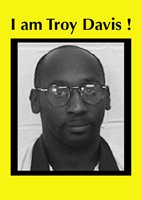
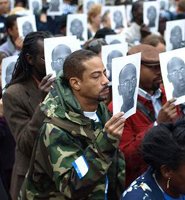
Weltweit werden solche Bilder entstehen, und je mehr Menschen ein Zeichen setzen, desto grösser ist die Wahrscheinlichkeit, dass die mögliche Hinrichtung Ende Mai nicht stattfindet. Heidelberg ist ein Begriff in den USA. Wir werden wahrgenommen. Zeigen wir uns!
Das schlimmste Unrecht ist das, welches von niemandem wahrgenommen wird. Setzen wir uns also so für andere Menschen ein, wie wir uns wünschen, dass man sich auch für uns einsetzen würde.
In der Vergangenheit wurden drei Hinrichtungstermine für Troy Davis nach massivem Protest der Weltöffentlichkeit ausgesetzt. Bitte tragen Sie dazu bei, dass dies auch dieses Mal der Fall sein wird. Es zählt jeder Einzelne.
Eine Initiative von: DAI Heidelberg, Amnesty International Rhein Neckar und der Gruppe "Freiheit für Mumia Abu-Jamal Heidelberg"
Robert Meeropol Rosenberg on tour through Germany promoting his book
Starting today Robert Meeropol Rosenberg will be on a tour through Germany to promote his book.
Robert Meeropol is the younger son of Ethel and Julius Rosenberg. In 1953, when he was six years old, the United States Government executed his parents for "conspiring to steal the secret of the atomic bomb."
He is also the founder and executive director of the Rosenberg Fund for Children (www.rfc.org), board member of MVFHR and anti death penalty activist.
About his book
Robert Meeropol was six years old when his parents, Ethel and Julius Rosenberg, were put to death. AN EXECUTION IN THE FAMILY: One Son's Journey details his political and personal odyssey from Rosenberg son to political activist. His story speaks of the collateral consequences of the death penalty and of the price children sometimes pay for their parents' politics, as it candidly details Robert's struggle to deal with his evolving views of his parents' case.
AN EXECUTION IN THE FAMILY charts the course of one man's life as he comes to terms with the death of his parents due to the destructive reach of a political witch-hunt. The memoir chronicles his struggle with the profound personal effects of the decision to go from leading a life in hiding, to revealing that secret and becoming a public figure open to scrutiny.
Attorney, activist and Rosenberg son Robert Meeropol speaks from a uniquely qualified position when he suggests how the nation should respond to the challenges it currently faces. "It took me almost forty years to figure out how to overcome my fear, harness my anger and transform the destruction that was visited upon my family into something constructive. America today is confronted with a similar challenge."
In case any one of you has time to get there (and lives close enough), events are:
Freitag, 6. März - 19 Uhr Anglistisches Seminar, Raum 108, Kettengasse 12, Heidelberg
Sonntag, 8. März - 19.30 Uhr Club Voltaire, Kleine Hochstr. 5, 60313 Frankfurt
Montag, 9. März - 20 Uhr Books in Berlin, Goethestrasse 69, 10625 Berlin
Dienstag, 10. März - 19 Uhr Daily Junge Welt, Ladengalerie Junge Welt, Torstrasse 6, 10119 Berlin-Mitte
Mittwoch, 11. März Buchmesse Leipzig, Zambon Verlag
Samstag, 14. März - 20 Uhr Baumwollspinnerei, Spinnwerk, Spinnereistrasse 7 (Halle 18, Eingang E), 04179 Leipzig
Spread new video on Troy Davis (von Amnesty International)
The 11th circuit court will either decide in favor of life or death for Troy Davis any day now. But he has been waiting for justice for 18 years. Forward this video to someone who has not heard the Troy Davis story and help shed light on injustice: Video.
The state of Georgia seems determined to kill Troy Davis. But your thousands of calls, faxes and emails have sent a powerful message that such an injustice is totally unacceptable. Georgia officials need to keep hearing your voice: Ask Governor Perdue to stop the execution of Troy Davis: Here...
You've heard the facts already:
7 of the 9 witnesses have recanted their testimonies. No murder weapon nor any physical evidence has been found to link Troy to the crime. One of the remaining two witnesses has even been implicated as the real killer.
Watch and share new Troy Davis video.
A new animated video, featuring original music by State Radio, illustrates the injustice of Troy Davis' case. Video produced by Citizen.
Despite this mounting evidence in favor of Troy's freedom, he continues to wait on death row.
Watch and share the story of Troy Davis by forwarding this new video to friends, family and supporters of human rights.
We are anxiously awaiting the court's response to the latest round of arguments in Troy's case that could be handed down at any moment. So the fate of Troy Davis is still very much in limbo. We need you to continue rallying support by spreading this video.
Each time you forward this video to a new person, you help build a stronger case for Troy and help tip the scale in favor of of justice.
In Solidarity,
Sue Gunawardena-Vaughn
Director, Death Penalty Abolition Campaign
Amnesty International USA
© Copyright 2008 | Amnesty International USA | 5 Penn Plaza | New York, NY 10001 | 212.807.8400
Troy Davis and the rhetoric of insanity
10 Dec 2008
The Troy Davis case indicates just how subjective the legal system really is. The federal 11thCourt of Appeals deals with cases in Florida, Alabama and Georgia. A panel of three judges selected from this court considered the Davis case yesterday. Rosemary Burkett, a Clinton appointee with both Arab and Hispanic ethnic roots, would like to see a full airing of the facts surrounding the Davis case. According to the Atlanta Journal-Constitution, Burkett finds it troubling that 7 of the 9 original witnesses have changed their stories and that one of the 2 witnesses sticking to his story has allegedly admitted to killing Savannah officer Mark Allen MacPhail.
Davis became the prime suspect in the case when Sylvester Coles told the Savannah police department that Troy was the killer. According to media accounts, Judge Burkett is wondering why Coles was never considered as a suspect. It's bad enough that we may be on the verge of killing an innocent man, she told the court during yesterday's hearing, but "it's also possible the real guilty person who shot Officer MacPhail is not being prosecuted."
Why, Barkett asked yesterday, were none of the witnesses in the case shown a photo array including a picture of Coles? "It seems police were so anxious to get somebody that they didn't pursue Coles," Barkett observed.
Judge Stanley Marcus, also a Clinton appointee, was less outspoken than Judge Barkett, but the testimony he was hearing bothered him as well. Since the 1991 trial, 3 witnesses had signed statements saying that Sylvester Coles admitted to the crime over a beer or between tokes.
True, a single witness, Stephen Sanders, is sticking by his story. At the 1991 trial, Sanders said, "You dont forget someone who stands over and shoots someone."
However, as defense attorney Tom Dunn reminded the court yesterday, Sanders originally told police he wouldnt be able to identify the shooter. Memory usually gets fuzzier over time.
According to the Atlanta Progressive News, the hearing revolved around two questions: "First, given the evidence available Tuesday, is it likely a jury would not convict Davis? Second, did Davis exercise due diligence in providing new evidence?"
Susan Boleyn, Senior Assistant Attorney General in the State of Georgia, argued the status quo position. Troy Davis has presented no hard evidence of actual innocence, she told the judges. Davis's claims have been denied relief by the state courts, the 11th Circuit, the U.S. Supreme Court and the state Board of Pardons and Paroles, she reminded the court. At some point you no longer get another bite of the same apple.
But when do you toss the apple core into the trash, and who decides?
Asked why 3 witnesses are primed and willing to testify that Coles privately confessed to murdering officer MacPhail, Boleyn rattled off a few theories. Colesmight have been drunk or high on marijuana; or perhaps Coles was trying to impress his listeners with a bold lie.
Boleyn reminded the judges that the reliability of recanting witnesses has traditionally been held in low repute. The fact that a witness admits that they once lied under oath (for whatever the reason) should be enough to undermine their credibility.
Taken together, Boleyn's arguments boil down to this: yall cant prove your man is clean, so we get to kill him.
Boleyn was also critical of defense counsel for not bringing their concerns forward in a more timely manner. This raises an interesting question: what happens when defense attorneys don't file their briefs on time? Should the defendant suffer for the mistakes of the people charged with his defense?
Well, yes, if precedent is anything to go by, he should.
The smooth running of the judicial machinery trumps all other concerns. The law requires finality. You cant have witnesses changing their minds willy nilly, especially in a capital case. Therefore, it is generally agreed that witness testimony should be taken at face value and that once a witness speaks the words are set in stone. Recantations undermine the finality prised by the legal system.
Unless, that is, a case achieves the kind of attention the Troy Davis case is currently receiving. When both sides are free to make their arguments and the media is paying attention (sort of), the immovable object ("we can't execute a man who might be innocent") runs up against the irresistible force of legal precedent ("a jury found him guilty and a string of courts have backed up their verdict, so hes a dead man").
Generally, a tie goes to the state. Not this time.
Does Susan Boleyn and her buddies at the Georgia Attorney General's Office know for sure that Sylvester Coles is innocent, Troy Davis is guilty, and the 7 recanting witnesses are all lying through their teeth? Of course not. How could they possibly know these things? They dont care because they don't have to. Accused murderers are run through a complex game of musical chairs and when the music stops and they haven't found a seat, they die. We don't have to know for sure that youre guilty, nor do we have to care. Justice is defined as whatever the legal system decides to do. If a case proceeds through the proper channels justice has been served.
If Susan Boleyn worried too much about these things she wouldn't be able to sleep at night. Cut the poor woman some slack; she's just doing her job. The Senior Assistant's role in the Troy Davis melodrama is to argue for the state of Georgia no matter how nonsensical her arguments may sound to the uninitiated. Hers is not to reason why, nor can she allow her private judgment to intrude into the matter. The decision was made by her bureaucratic superiors and she is paid to spout their arguments in public even when it makes her look like an escapee from a Monty Python sketch.
Generally it doesn't matter because no one from the outside world is paying attention.
If folks had given up on Troy Davis he would be long dead. But because a shining slivver of humanity is paying attention and a handful of reporters are still pressing pen to paper Troy Davis clings to life.
It's got nothing to do with fairness or even common sense; it's all about finality and bureaucratic efficiency.
(source: Friends of Justice)
Troy Davis erhält eine Anhörung vor dem 11. Bundesberufungsgericht
Hallo Unterstützerinnen und Unterstützer von Mumia Abu-Jamal,
vor wenigen Stunden erhielten wir die äusserst positive Nachricht, dass Troy Davis eine Anhörung vor dem 11. Bundesberufungsgericht erhält.
Das ist ein grosser Erfolg für ihn und die Anti-Todesstrafenbewegung. Im September wollte der Bundesstaat von Georgia ihn noch umbringen, jetzt befindet ein Bundesgericht, es sei notwendig, sich seinen Fall anzusehen.
Ohne die weltweite praktische Solidarität wäre es dazu nie gekommen und Troy heute bereits tot.
Natürlich ist Troy Davis noch lange nicht gerettet, aber jetzt hat er zum ersten Mal eine formale Chance. Last uns diesen Fall weiter im Auge behalten.
Es folgt ein Brief in englisch von der Kampagne zur Beendigung der Todesstrafe (CEDP) und ein erster Artikel, basierend auf einer AP Meldung.
Hier gibt es noch einen aktuellen deutschsprachigen Artikel dazu.
Viele Grüsse vom berliner Mumia-Bündnis
More on Troy Davis, whose lawyers were granted the right to present oral arguments. Clearly, the 11th Circuit Court of Appeals thought this case deserved a second look. Note the tortured logic of Chatham County District of Attorney, who says that the recantation of eyewitness testimony suggests &qout;manipulation&qout;. Many of these witnesses are risking perjury charges by coming forward now. Far more likely is that the &qout;manipulation&qout; was by police and prosecutors who were building a case against Troy in 1989, as these witnesses and Troy allege.
http://www.ajc.com/metro/content/
metro/stories/2008/11/19/troy_davis_appeal.html
Metro
Federal appeals court to hear Troy Davis case Dec. 9
Associated Press
Wednesday, November 19, 2008
SAVANNAH, Ga. - The federal appeals court in Atlanta will hear arguments Dec. 9 on whether death row inmate Troy Anthony Davis can continue to challenge his conviction in the killing of a Savannah police officer, a state official said Wednesday.
Russ Willard, spokesman for the Attorney General's Office, said a three-judge panel of the 11th U.S. Circuit Court of Appeals will hear arguments on whether Davis can file a second federal challenge to his conviction.
Recent headlines:
Clinton rallies Atlanta support for Jim Martin
Counties debate, decide to take $81M in foreclosure aid
Former state legislator, Carrollton mayor dies
Metro and state news
The 11th Circuit issued a stay of execution three days before Davis, 40, was scheduled to die Oct. 27 for the 1989 murder of Officer Mark MacPhail.
It was the third time since July 2007 that Davis has been spared the death penalty by a late court decision.
Defense lawyers have tried to win a new hearing for Davis since several witnesses who identified him as the killer came forward and changed their testimony, saying that another man shot MacPhail.
The officer was working off-duty as a security guard at a bus station when he rushed to help a homeless man who had been pistol-whipped at a nearby parking lot. The 27-year-old was shot twice when he approached Davis and two other men.
Davis' lawyers say new evidence proves their client was a victim of mistaken identity.
Prosecutors have said the case is closed. In court hearings, they said some of the affidavits repeat what a jury trial already has heard, while others are irrelevant because they came from witnesses who never testified.
District Attorney Spencer Lawton also said he doubts the new testimony meets the legal standards for a new trial. And while the recantations may seem persuasive to some, Lawton said, "to others of us it invites a suggestion of manipulation, making it very difficult to believe."
Davis was set to be executed in July 2007, but Georgia's pardons board postponed the execution less than 24 hours before it was to be carried out.
Over the next few months, a divided Georgia Supreme Court twice rejected Davis' request for a new trial, and the pardons board turned down another bid for clemency after considering the case again.
Then, two hours before his scheduled Sept. 23 execution, the Supreme Court issued a stay. A few weeks later, the high court cleared the way for the execution when it decided not to give Davis another hearing.
Neue Unterschriftenaktion für Troy Davis
Amnesty International USA hat eine neue Unterschriftenaktion
 für den Todestraktinsassen Troy Davis gestartet. Bereits
dreimal konnte seine Hinrichtung durch starke Proteste in letzter
Minute verhindert werden. Während im Augenblick viele mit
Spannung auf die Entscheidung warten, ob das zuständige
Bundesberufungsgericht ein neues Verfahren für Troy anordnen
wird, konzentriert sich die Amnesty-Aktion auf den Governeur
Georgias, George Perdue.
für den Todestraktinsassen Troy Davis gestartet. Bereits
dreimal konnte seine Hinrichtung durch starke Proteste in letzter
Minute verhindert werden. Während im Augenblick viele mit
Spannung auf die Entscheidung warten, ob das zuständige
Bundesberufungsgericht ein neues Verfahren für Troy anordnen
wird, konzentriert sich die Amnesty-Aktion auf den Governeur
Georgias, George Perdue.
Entgegen der von ihm und anderen mehrfach gemachten Behauptung räumt die Verfassung des US-Bundesstaates von Georgia durchaus die Möglichkeit des Eingreifens durch den Governeur ein.
Da die Beweislage gegen Troy Davis extrem "dünn" ist (es gibt lediglich neun Augenzeugen, von denen sieben ihre Aussagen zurückzogen und keinerlei Fingerabdrücke, genetische Spuren, Tatwaffe oder Motiv), ruft diese Brief/Faxaktion den Governeur dazu auf, von seinem Recht Gebrauch zu machen und die Hinrichtung gegen Troy vollständig auszusetzen.
Bitte unterschreibt und verbreitet die Aktion weiter.
Rob Will writes from death row in support of Troy Davis
The Campaign to End the Death Penalty is seeking letters/articles from death row prisoners in support of Troy Davis. Please email me if you have a letter you would like to share.
Below is an article about Troy Davis from Rob Will. Rob Will is on Texas death row where he has been since 2000. He also was accused of killing a police officer. Rob is an activist on the inside. He is involved in the fight for prisoners rights and is trying to prove his innocence. "Right now, I am on the disciplinary pod for actively organizing and protesting the oppressive conditions we live under. I've been tear gassed, beat down, and put on every type of restriction available."
You can learn more about Rob by visiting
On the Case of Troy Davis
by Rob Will
I recently heard that Troy Davis has been issued another stay of execution, though I'm not sure of all the details. (Sometimes, news takes a while to reach the confines of this dungeon.)
I'd like to encourage everyone to go to his support website (http://troyanthonydavis.org/) and offer any help that you can. Remember, inaction is consent and the only way to make change happen is to be active.
One of the main issues in the Troy Davis case is that 7 of the 9 prosecution witnesses have recanted their testimony since his trial. This fact alone should ensure that he receive a new trial. However, as a general rule courts give more weight to trial testimony. Their reasoning being that witness testimony at trial is closer to the time of the crime so memories are more reliable and the testimony is given in front of a judge in open court with both prosecutors and defense attorneys engaging in cross-examination.
The Orwellian double-think justifications the courts give for deplorable and unjust actions and ideology never cease to amaze me It is true that some memories fade with time but in many ways trial testimony is less reliable than recantation after trial. Also, some witnesses are more likely to come forward after a trials conclusion. Here are some examples from the Troy Davis case:
Years after the Troy Davis trial, Tonya Johnson came forward and signed an affidavit stating that she saw another man come around the corner from the scene of the crime, sweaty and anxious and stash two guns in a vacant house. She also has said that she was terrified of this man.
To Ms. Johnson, it was very obvious that this other man, who she knew as "Red", had committed the murder. Imagine how she felt when another man was arrested for the crime. Perhaps, she thought she was the only one who knew the Truth alone with the Truth that a murderer was still free a murderer who perhaps was looking to kill any and all witnesses. One can surely understand her reluctance to come forward.
It took nearly 10 years for D.D. Collins, a trial witness in the Troy Davis case, to recant his testimony. He has stated that he was "scared as hell" when police took him in for questioning. Speaking about the experience of being forced to say what police demanded of him, D.D. Collins has said: "They told me I would go to jail for a long time and I would be lucky if I got out." It should be noted that Mr. Collins was only 16 when he was interrogated and his parents weren't present.
Imagine how intimidating it would be for a 16 year old kid to be interrogated by police who were probably twice his size and who were telling him he would go to jail if he didn't say what they demanded. Faced with that type of intimidation many people will say whatever regardless of how True it is, just to get out of the police station safe and sound.
Another trial witness, Dorothy Ferrell, later recanted her testimony that implicated Troy Davis. The mother of four children, who had a previous shoplifting charge, has said that she "couldn't go back to jail" and she felt that she "didn't have any choice but to get up there and testify". Losing your four children and going to jail or saying whatever the prosecutors and police demand that you say many would chose the later.
Interestingly, a former district attorney who worked for the prosecutor's office that sent Troy Davis to death row has admitted that "the majority of African Americans don't see police or prosecutors as friends. They aren't as hawkish. They are more concerned with crime solutions and fairness." Keep in mind that these are the words of a former prosecutor, not the rantings of some "far left radical." (This statement is True, but I would say add that it applies to poor communities of every ethnicity, not just black folks.)
All three witnesses I mentioned are from a poor area of Savannah, Georgia where police and the court system are viewed as corrupt. A warranted view, quite obviously. In the midst of a courtroom full of police and prosecutors a person is more likely to side with the State. Cross examination in front of a judge only adds to the pressure.
In turn we must remember that police and prosecutors employ every manipulation tactic available. Being that I, like Troy Davis, am on death row unjustly for capital murder of a police officer, I know all too well what lengths the State will go to in order to achieve their goals and objectives. They will unrepentantly break laws and intimidate by any and all means. They will lie and deceive in every manner imaginable. It's up to us to shed light on these facts, facts that are painfully illustrated by the Troy Davis case.
To detail all the problems with his case would take many pages. I urge everyone to go to his website (http://troyanthonydavis.org/) to learn more and then spread the word about his fight for freedom. Those with a vision of a more just and peaceful future for Humanity have to stand together. It's up to us to make real social change a reality.
Troy Davis - erneuter Hinrichtungsaufschub
Gute Nachrichten aus Georgia, USA
 Bereits zum dritten Mal ist aufgrund von Protesten und Anwaltsinterventionen die Hinrichtung
von Troy Davis im US-Bundesstaat Georgia ausgesetzt worden. Vor wenigen Stunden entschied
das 11. Bundesberufungsgericht der USA, Troys Verteidigung die Chance auf weitere
Präsentation von Material einzuräumen.
Bereits zum dritten Mal ist aufgrund von Protesten und Anwaltsinterventionen die Hinrichtung
von Troy Davis im US-Bundesstaat Georgia ausgesetzt worden. Vor wenigen Stunden entschied
das 11. Bundesberufungsgericht der USA, Troys Verteidigung die Chance auf weitere
Präsentation von Material einzuräumen.
Anscheinend geht es um die juristische Frage, ob Troy Davis und seine Verteidigung "zwingende Anforderungen" erfüllen kann, die eine mögliche Runde neuer Anträge rechtfertigen könnte. Die Verteidigung hat eine Frist von 15 Tagen, um ihr Material einzureichen.
Mehr Hintergründe hier... und in den untenstehenden Aritkeln.
Troy Davis wird am 27.10.08 hingerichtet - ausser wir alle verhindern es
Einen Tag nach der verhängnisvollen Ablehnung des US Supreme Courts, Troy Davis eine Anhörung über ein neues Verfahren zu geben, haben die Behörden ein Hinrichtungsdatum für Troy Davs verkündet: 27. Oktober 2008
Lest im nächsten untenstehenen Artikel, wie wir uns wehren können,
Troy Davis: Supreme Court lehnt neue Anhörung ab - Hinrichtung droht!
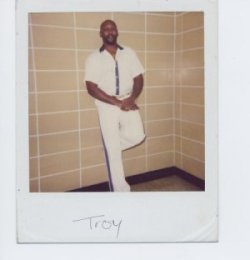
Wie vor wenigen Stunden bekannt wurde, hat der US Supreme Court eine Anhörung über ein
mögliches neues Verfahren für Troy Davis abgelehnt.
weiter geht's hier...
(inkl. Links zu Onlineprotesten).
Macht mit!!!
Hier könnt ihr aktiv werden. Bitte verbreitet diese Informationen auch weiter:
- Amnesty International USA: E-mail Aktion und/oder Briefvorlage an den Begnadigungsausschuss von Georgia, USA, um eine Begnadigung für Troy Davis zu fordern.
hier...
Adressen des Begnadigungausschuss:
Chairman Gale Buckner
State Board of Pardons and Paroles
2 Martin Luther King, Jr. Drive, SE
Suite 458, Balcony Level, East Tower
Atlanta, Georgia 30334-4909
Telephone: (404) 657-9350
Fax: 404-651-6670 and (404)651-8502Thurbert E. Baker
Office of the Attorney General
40 Capitol Square, SW
Atlanta, Ga 30334
Phone:(404) 656-3300
Fax:(404) 657-8733Spencer Lawton, Chatham County District Attorney
Chief Assistant District Attorney David Locke
133 Montgomery Street
Savannah, Georgia 31401
Phone: (912) 652-7308
Fax: (912) 652-7328 or (912) 447-5396
Öffentliche Proteste in den USA:
- Sa, 18.10.08, 14:00 Washington, 14th St. and Park Rd. NW (near Columbia Heights Metro)
STOP THE EXECUTION OF TROY DAVIS!
Aufrufer_innen: Campaign to End the Death Penalty, Washington Peace Center, Nat Turner Rebellion, Black August Planning Committee, International Socialist Organization, National Lawyers Guild, and others.
Kontakt zur Demovorbereiterung
- Sa, 18.10.08, 14:00 Washington, 14th St. and Park Rd. NW (near Columbia Heights Metro)
- Sa. 18.10.08 11:00 - 14:00 New York, 125th Street -- SW Corner, Frederick Douglass Blvd (Harlem)
Infotisch mit Unterschriftensammlung
Keep up the fight for Troy Davis -- STOP THE EXECUTION!!
Aufrufer_innen: Campaign to End the Death Penalty
Kontakt
weitere öffentliche Proteste in Vorbereitung
Wer kontinuierlich Infos zu Troy Davis erhalten möchte, kann sich hier mit Betreff TROY DAVIS in eine E-Mail Liste eintragen.
Troy Davis: Entscheidung auf 6.10.2008 vertagt
Entscheidung vertagt /// Hinrichtungsbefehl läuft aus /// juristsiche Details
Es wird immer erstaunlicher. Am 29. September 08 veröffentlichte der Supreme Court der USA lediglich, dass er seine Entscheidung vertage, ob er ein neues Verfahren für Troy in Erwägung zieht oder aber das Todesurteil bestätigen wird. Als Datum dafür wurde nächste Montag, der 6.10.08 genannt.
Der Supreme Court muss sich juristisch mit der Frage beschäftigen, ob zurückgezogene Zeugenaussagen, die ja im ursprünglichen Verfahren die einzigen "Beweise" zur Verurteilung waren, ein ausreichender Grund sind, dass Verfahren zu wiederholen oder zumindest die Todesstrafe ausser Kraft zu setzen.
Das höchste Gericht des Bundesstaates Georgia hatte das im Frühjar 2008 überraschenderweise mit 4:3 Stimmen verneint.
Ein interessantes Detail ist auch die Tatsache, dass der ursprünglich angesetzte Hinrichtungsbefehl am Mittwoch, den 1.10.08 ausläuft. Jetzt ist Troy Davis zumindest vor einer blitzschnell vorgetragenen Hinrichtung in relativer Sicherheit.
Troy Davis Unterstützer_innen nahmen dies zunächst als weiteren Etappensieg auf. Während auf Berichte von den Demonstrationen und weiteren Protesten am Aktionstag für Troy Davis noch gewartet wird, lässt sich eine deutliche Veränderung zugunsten von Troy Davis in der Öffentlichkeit beobachten.
Als Beispiel hier diese 3-minütige Reportage auf CBS News vom letzten Sonntag. Leider muss mensch sich vorher einen kurzen Werbeclip ansehen, aber die Reportage ist erstaunlich. Sie zeigt einen der früheren Zeugen am Tatort und befragt ihn zur Tatnacht und ob er Troy Davis überhaupt kennen würde. Er sagt, die Polizei habe ihn zu der Aussage genötigt. Er kenne Troy Davis überhaupt nicht. Danach wird ein damals ermittelnder Polizist aus Savannah interviewt sowie der Sohn des erschossenen Polizisten. (siehe hier...)
Während im Mai 2008 nach einer kurzen Pause wieder etliche Hinrichtungen in den USA stattfanden, ist dieser bisher erfolgreiche Kampf im das Leben von Troy Davis ein Beispiel dafür, dass die Todestrafe als Institution in den USA nicht mehr als selbstverständlich hingenommen wird.
In "SAVANNAH Now" erklärt ein Artikel, warum der alte Hinrichtungsbefehl gegen Troy Davis heute ausläuft und wie formal ein neuer ausgestellt werden könnte (siehe hier...)
Hier gibt es einen Brief von Troy Davis.
Grossartig. Troy Davis lebt!!!
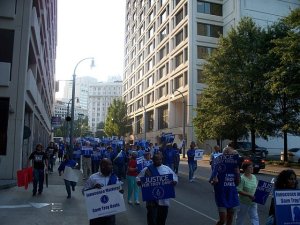 2 Stunden vor der angesetztenHinrichtung ist der US Supreme Court dazwischen
getreten und hat die Hinrichtung verschoben. Troy Davis ist jetzt zum zweiten
Mal vor der Ermordung durch die Regierung gerettet worden.
Ein grosser Sieg der Anti-Todestrafenbewegung.
2 Stunden vor der angesetztenHinrichtung ist der US Supreme Court dazwischen
getreten und hat die Hinrichtung verschoben. Troy Davis ist jetzt zum zweiten
Mal vor der Ermordung durch die Regierung gerettet worden.
Ein grosser Sieg der Anti-Todestrafenbewegung.
Vielen Dank an alle, die sich in den letzten Tagen so zahlreich an den online-Protesten beteiligt haben.
Eines ist jetzt jedoch klar: Es war nur ein Teilerfolg.
Was heisst das?
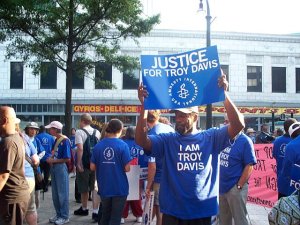 Wir werden in den nächsten Tagen versuchen, eine genaue Darstellung der
Sachlage zu liefern. Dann sollten alle, die Lust und Zeit haben, sich für
kommenden Montag (abend) bereit halten, falls wir erneut Online-Proteste
organisieren müssen. Eventuell haben wir aber auch mehr Zeit dabei.
Wir werden in den nächsten Tagen versuchen, eine genaue Darstellung der
Sachlage zu liefern. Dann sollten alle, die Lust und Zeit haben, sich für
kommenden Montag (abend) bereit halten, falls wir erneut Online-Proteste
organisieren müssen. Eventuell haben wir aber auch mehr Zeit dabei.
Klar erscheint uns jetzt schon, dass diese Online-Proteste eine starke Unterstützung für die Aktivist_innen vor Ort waren. Irgendwie werden sie in den meisten Presseartikeln erwähnt und auch die offiziellen Stellen in Georgia beschwerten sich bereits Montag früh über die Arbeitslast in ihren Büros. Der Server war ihnen auch zusammengebrochen.
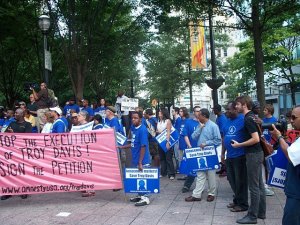 Der Aufschub (STAY) der Hinrichtung gilt nur bis nächsten
Montag, den 29. September.
Der Aufschub (STAY) der Hinrichtung gilt nur bis nächsten
Montag, den 29. September.
Im Prinzip ist es so: Der Stay bleibt zunächst bestehen bis zum 29. September. An diesem Tag beraten die Supreme Court Richter_innen, welche Fälle sie in der neuen Sitzungsperiode zur Anhörung zulassen.
Entscheiden Sie am 29. den Fall anzunehmen, bleibt der Stay bestehen bis zur Entscheidung nach der Anhörung. Schmettern sie dann Certiorari ab, wird der Stay automatisch aufgehoben; gewähren sie Certiorari, dann entwickelt sich sowieso alles anders.
Entscheiden sie am 29. den Fall nicht anzunehmen, dann wird der Stay automatisch aufgehoben. Der Hinrichtungsbefehl tritt sofort wieder in Kraft. Eine Hinrichtung würde dann in Georgia vom zuständigen Gefängnisdirektor sehr schnell wieder angeordnet werden.
Falls ihr in einen Verteiler zum fall Troy Davis aufgenommen werden wollt, schreibt an info@mumia-hoerbuch.de mit Betreff: TROY DAVIS
Viele Grüsse Mumia-Hörbuchgruppe
Unterstützt Troy Davis: noch aktuellere Meldungen
Students protest death penalty
Unterstützt Troy Davis: aktuelle Meldungen
Hallo Unterstützerinnen und Unterstützer von Mumia Abu-Jamal,
Der Fall des Todestrakthäftlings Troy Anthony Davis erregt im Augenblick die US-weite als auch internationale Öffentlichkeit. Trotz starker Zweifel an der Schuld des wegen Polizistenmord verurteilten Afroamerikaners hat der Supreme Court des US-Bundesstaates Georgia seine Hinrichtung für den 23. September 2008 auf morgens 7 Uhr Ortszeit festgesetzt.
Es bildet sich im Augenblick lauter Protest gegen diesen angekündigten Justizmord. Ein aktueller Bericht findet sich hier Hintergründe zum Fall in deutscher Sprache erschienen vor wenigen Tagen hier
Wir möchten euch alle bitten, diesen Kampf um das Leben von Troy Anthony Davis in euren Publikationen und Webseiten aufzunehmen. Ferner kann es bestimmt nicht schaden, auch den in beiden Artikeln angegebenen Musterbrief zu unterschreiben und abzusenden.
Die Kampagne zur Beendigung der Todesstrafe (CEDP) hält auf ihrer Webseite beinahe täglich Neuigkeiten bereit. Es ist auch möglich, sich dort in eine e-mail Liste einzutragen, um schnell informiert zu werden.
Für die weltweite Abschaffung der Todesstrafe!
Freiheit für Mumia Abu-Jamal!
Viele Grüsse von der Mumia-Hörbuchgruppe
Helft mit, Troy Davis vor der Hinrichtung zu retten!
Hallo,
wir möchten dich/euch bitten, sich einige Minuten Zeit zu nehmen, um den seit 1989 im US-Bundesstaat Georgia inhaftierten Afroamerikaner Troy Anthony Davis vor der drohenden Hinrichtung zu retten.
Troy war 1991 zum Tode verurteilt worden. Sehr wahrscheinlich ist er unschuldig - gererell einmal davon abgesehen, dass unserer Meinung nach keine Regierung das Recht hat, Gefangene umzubringen.
Ausführliche Hintergründe in deutscher Sprache finden sich in einem Indymedia-Artikel hier
oder in englisch bei Amnesty International
Nun hat das höchste Gericht in Georgia seine Hinrichtung angesetzt, ohne auf die noch ausstehende Entscheidung des Supreme Courts der USA warten zu wollen. Am 23. September um 7 Uhr Ortszeit soll Troy nach dem Willen des gerichts hingerichtet werden.
Die wahrscheinlich einfachste Art, Troy Davis zu helfen, ist, an den Begnadigungsausschuss von Georgia zu schreiben. Dieser trifft sich diesen Freitag, den 12. September, zu Beratungen über den Fall. Amnesty International hat eine Sammel-E-Mail vorbereitet
Es ist aber auch möglich, einen eigenen Text zu verfassen und selbst an den Begnadigungsausschuss über diese E-mail zu senden: Clemency_Information@pap.state.ga.us
Bitte leitet dieses Schreiben an Freunde und Bekannte weiter. Es ist durchaus möglich, diese drohende Hinrichtung zu verhindern.
Viele Grüsse von der Mumia-Hörbuchgruppe
Anniversary journal entry by Kenneth Foster one year after his succes against his planned execution
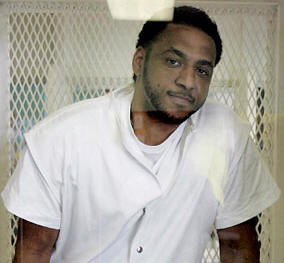
As we fight for Troy Davis and to end the death penalty in the U.S., it's sometimes worth stepping back to remember victories in our struggle. Below is an inspring journal entry from Kenneth Foster Jr. in Texas. A movement brought attention to his case last year, and he was spared the executioner's needle.
Printed below you will find the latest journal entry of Kenneth "Haramia" Foster, Jr. This entry details his recent experiences as he celebrates the one-year anniversary of his commutation off of Texas' Death Row and anticipates his level review. As many of you have already heard, Kenneth was granted G2 status, which greatly enhances his quality of life through job and education opportunities, free movement out of handcuffs and most importantly, contact visits with his loved ones.
I won't spoil anymore, other than to say that the sweetest words I have heard in some time include "You can take the cuffs off of him now." Kenneth's wishes are to circulate this entry widely and to send his love and gratitude to all.
One Struggle,
Laura E. Brady
Austin Campaign to END the Death Penalty
You can write Kenneth at:
Mr. Kenneth E. Foster Jr.
#1451768
McConnell Unit
3001 S. Emily Dr.
Beeville, TX 78102
*******************
8.30.08 Anniversary Journal Entry
Kenneth "Haramia" Foster, Jr.
It dawned upon me that the one-year mark of my 2007 scheduled execution was approaching. The emotions of that day still have not subsided and perhaps they never will, though I find myself getting stronger each day and my vision is getting clearer.
I've never been much for celebrating "events" in prison. I can't relate to most holidays and I never feel enough freedom to experience TRUE joy in my celebrating. But, I have found ways to smile and enjoy the beautiful things that we pull out of this type of situation. When the joy and pain combine it's kind of like something a man named Walter S. Landor said: "A smile is ever the most bright and beautiful with a tear upon it."
So, I decided to enjoy myself. I decided to let the disciplines down for a moment to pull back into myself and rejoice in what has manifested for me. I had to tell myself- "OK, no level 2 or level 3. No hunger strike right now. Enjoy the moment."
What better way to set things off than with some celebration cake? So, the first thing I did, a few days before the anniversary day, was to buy me a cake (OK, it was more so a pie). There's some creative cooks around here. When you have very little to deal with I suppose you become a genius at making something out of nothing. So, I ended up with a banana pudding pie, which I sinfully ate. But, no regrets this day. It was a day to enjoy.
I let a few days pass before I went into mode 2. I decided to cook a special meal for me and my cellmate. That would be accomplished with what I have coined as: the double decker pizza. For those that have tasted this, this has become a favorite request from me (yeah- I've picked up some of those creative cooking skills too). What was strange about this day was I had somehow thought that it was the 30th. I can't explain how I lost a day. I can only think that perhaps it was all the anticipation I had approaching my review. But, maybe it was something else that caused me to wake on the 29th and begin my celebration. I wouldn't catch that understanding until later that day when a comrade inquired about why I was celebrating that day. With a "You don't know why" expression on my face I lifted my left arm and showed him the Texas Tears tattoo on the back of my arm and highlighted the 8.30.07 date inked into my skin. He left off a little smile and told me- "But today is the 29th." Like Homer Simpson- "DOH!" But, it wasn't as bad of a bungle as I thought. When I later told another comrade of mine about the event he gave me this:
"You didn't mess up. You celebrated just right. You see - the 29th is the TRUE day that you went through your trauma. It's the day they kidnapped you and it's the day you were dragged into the death house. It was the day that you first saw the death chamber room. So, you can see the 29th as your demise and you can see the 30th as your resurrection."
And there it was. Everything was as it was supposed to be. I went to bed with a smile on my face and in my heart. By the time the 30th came I felt like I had celebrated plenty with cake, pizza and excitement, so I took this day to simply reflect on my life and give thanks for having this opportunity. Looking at those that have been murdered after me, looking at the complications with the Jeff Wood case I still wonder how/why I am here. I realize it's due to something greater than me and I realize that this doesn't come free for me. There's not a moment that thanks is not emitted from my heart and I realize that I have to do all I can to show that. For those that campaigned for me a year ago I understand how potent this was to them. I understand the power of August 30th (as Bryan McCann would demonstrate to me when he tattooed 8.30.07 on his left arm). 8.30.07 has become a mantra.
I would end my day with prayers and appreciation and also the hope that one day I will celebrate 8.30.07 in the company of my loved ones and also the masses. It's something that I am fighting for and it's something that I can't surrender. And I do realize that this is only the beginning. August 30, 2008 was a great day, but the best is yet to come.
Level Review 8.30.08-9.5.08
For those that have remained posted to my situation you will know about how I had been kept on Close Custody for a year- an environment that was only slightly different from the one I just left. It was a test of all tests. Mentally and spiritually. What these people attempted to place on me as only a year was in fact something way beyond that- it was a 12-year wait. It was a 12-year wait that should have never had to be.
The weekend had passed and the 2nd had approached. Usually when you have an appointment somewhere (Medical, Attorney visit- amongst a few things) you receive a notice the day before. I didn't receive a notice that I would be attending Classification on this day, so I was caught off guard when an officer came to my cell and said I was wanted for Classification review. I had thought that maybe they would purposely make me wait until the last date for the review- the 5th. But the day had come.
I put on my best whites and took the stroll to the Classification office. There I was faced with the same Major (Ambriz) that I had when I was denied at my 6-month mark. This time he was flanked by 2 new women. I was told to take a seat and my file was gone through. At our last meeting 6 months ago my review ended with a denial and a verbal protest from me. I didn't know how this one would end. While I knew I had a chance to get my full level I didn't expect it. I expected a partial upgrade and in the back of my mind I expected some excuse for another denial.
The Major went through my file and stated- "The computer suggests G2." I didn't give the slightest response. I knew that there had to be 2 out of the 3 agreeing, but I also know that they make these decisions ahead of time. The woman to Abriz's left asked if there was any disciplinary. Ambriz responded only one, but it was minor and had no bearing. So, with that no more inquiry was given and Ambriz marked on the paper- "G, line 1." When he did that the lady looked up at me and I couldn't help but to at that point let off a slight smile. "You can take the cuffs off of him now." And that's what it was. My files were wrapped up and the Major excused me on my way. Without as much as a peep I slid on out the door with some pep in my step and I hit the pavement for the first time without the steel rings around my wrist. In the short time that I've been on the Unit I've come to know a few people- many guys having read about my case in Texas papers and when they saw me on the sidewalk they couldn't help but to extend a fisted salute and a smile. Without a doubt I reciprocated it.
I returned to my cell, packed all my property and left Close Custody. I gave my greetings to those I associated with and walked out the door with a lot of support from those that knew what I had been through. As one brother would tell me in a heartfelt way- "You have to remember, you're an inspiration to a lot of us."
I was immediately sent to 4 building- A.side of the prison. A. side being what's considered the "good" side of town - whereas 8 building (close custody and majority medium custody) is known as the not-so-good side. The ghetto of the city! It's a whole different way of life on this side - clean walls, jobs, but sadly all coated with a mentality that you better not mess up otherwise all of this can be taken from you at the blink of an eye. I was already prepped by brothers who had been over here about the officers that abuse their authority and also like to be playful. Neither of these things are things that I'm used to, but I realize that if I am to put myself in a position where I can enjoy the fruits of my and my people's struggles then I must be smarter than my adversaries. As Ralph W. Trine said: "When apparent adversity comes, be not cast down by it, but make the best of it, and always look forward for better things, for conditions more prosperous." I realize everyday will be a struggle, so like a babe once again I take baby steps.
I spent my first few days walking around to chow, just soaking up the days. By this time I had hugged and been hugged at least 100 times by brothers I knew or had heard about me. Men I didn't even know came up to me and shook my hand because they had read about my struggle. One guy had read about my daughter in the Bay Review! It was all a beautiful thing. But at the same time I was as lost as a kid in an amusement park. I had to ask some of the brothers where to go, what such and such means and how to do this or that. It's often followed by a little laugh from them, but always by a pat on the back, because they realize for the last 8 years I have been boxed within a box. In all actuality out of my 12 years of incarceration I had only spent maybe a little over 3 years around other inmates (before the isolation at Polunsky in 2000 - and those 3 years include the 11 months I spent in the county jail). So, this is an accomplishment beyond words- no more cuffs everywhere I go. No more isolation. Of course, anything could happen from day to day to drop my levels again. I know that. All I can do is walk my walk and deal with what comes my way. I definitely am not entertaining any thoughts that my struggles are over forever.
I was immediately given a job working in the kitchen (not that I need to be around any food judging by some of the teases I've gotten from the few pounds I've put on. I guess some people forgot that my greyhound look back then was compliments of Polunsky oppression that we had to protest and go and entertain hunger strikes and no commissary for months at a time. That's caustic humor for those that didn't know. I don't regret any of it.) The kitchen would prove to open a few other doors to me (not just the refrigerator ones). I came across 2 guys that I knew on death row- Johnny Bernal and Raymond Cobb. Both were freed from death row in 2005 when the juveniles were freed. These weren't close friends of mine, but were guys I had met. Nevertheless we hugged each other like we were long lost brothers. We spoke a bit about our personal situations back then and currently and then parted to finish work (though we'll definitely be seeing more of each other from day to day). But again, the best was yet to come.
Victory Day
It had been awaited for longer than I could remember. Now as a G2, line 1 I could qualify for contact visits and my day had come. September 6th I was called from work for my first visit as a G2. I went back to my cell, showered and pulled on my freshly starched whites. I adorned my boots- checked the mirror one last time and walked with a mean swagger to my visit. Once there I would be told to go to table 15; and there was the greatest thing in the world waiting for me- my amazing grandfather who had raised me and been my rock for the majority of my life. I walked up behind him and gave him a hug. He rose with a great smile and hugged me back. We embraced even tighter and I gave him a kiss on his cheek. The smiles between us could have lit a black hole in the universe. We clasped hands and rejoiced at the day. We sat down, ate together, had a bunch of laughs and had a great visit. I remember there were days that I never thought I'd be able to touch my grandfather again. All of this has come with many losses too - my grandmother being riddled with Alzheimer's disease so bad to where she can't leave home for such visits. It's a pain (almost like my mother's death) that I will have to carry with me for the rest of my life. My victory hasn't come without scars as well.
It was hard to let go, but we said our goodbyes for the day. I hugged my grandfather- the man I love the most - tightly and gave him a kiss on the cheek as we parted. It was a beautiful day and all the brothers asked me how I felt. Again - it's something beyond words. I am thankful beyond words.
Now I only await the final pieces to this puzzle and that's to be able to hold my daughter and wife. But of course there are so many others that I too would like to be able to spend time with. God willing it will all happen. But for now I just take things one day at a time. Little by little I will adjust to my surroundings and I hope to be able to take full advantage of what is available to me.
As I close out Resurrection Week I bow my head and say a silent prayer for those that couldn't be here and amongst all the ups and downs, struggles and glories I do realize- as I've said thus far- the best is till yet to come.
Stay Tuned...the struggle continues
Dallas County DA wants to re-examine nearly all of pending death row cases
Statement from Kevin Cooper for Troy Davis
"Brothers"
By Kevin Cooper
I have never personally met my cultural brother Troy Davis. Yet I know him as I know myself. This kindred spirit is in a different part of this country, yet we are experiencing damn near the same things.
I have seen Mr. Davis photograph, and he looks nothing like me, or me like him, yet he is my brother. His black skin is the only thing that makes us resemble each other, and as far as I know our skin is different shades of black. But in america, black skin is enough of a reason to find ones self in a fight for your very life, because in america, or certain parts of it, black skin is unforgivable!
Like Troy Davis I was once 'saved or spared' from being first tortured, and then murdered by a state government...if only temporarily. This happened to me on February 9th, 2004, when I came within 3 hours and 42 minutes of being tortured and murdered by the state of california before I was granted a stay of execution. I await the final outcome of the 9th circuit court of appeals decision on my case, which can happen any day. I do so knowing and understanding from experience the emotional stress, mental anguish, and psychological torture that my brother and his family are currently going through.
This unjust criminal justice system does not care about truth, or justice, it and the people who work within it for the most part care only about upholding the will of the status quo. These people have no right to take from us what they did not give us...our lives. Not only do they have no moral right, despite what they claim they have no god given right, or any other type of right to kill people. Not even a legal one, because their law is not only arbitrary, it's sick, it's inhumane and it doesn't work, just to state a few reasons why this madness must be stopped!
My connection to and with Troy Davis and his family is not only personal because of our circumstances, it's also historical because there has never been a time within this country that we black men and our families have not been more connected to each other because of our deaths at the hands of the white supremist power structure than we have been as everyday human beings. While this is a damn shame, it's the real truth!
I am being realistic, and trying not to be pessimistic in this reality that is fatalistic in the fact that I am maybe about the lose another brother, who like many of my brothers and sisters are innocent. Yet our innocence doesn't seem to matter to the sons and daughters of american hypocrisy!
Todestrafe USA: staatl. Morden beginnt erneut
Am 16. April 2008 entschied der US-Surpreme Court mit 7:2 Stimmen, die Klage von BAZE et. al abzeweisen. Das hat verheerende Auswirkungen auf das Leben der derzeit über 3300 Todestraktinsass_innen in den USA.
Die Vorgeschichte: Baze and Bowling v. Rees
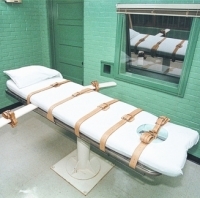
In Kentucky hatten im vorigen Jahr die Todestraktinsassen R. Baze und Bowling geklagt. Durch die Anwendung des 3-Gifte-Cocktails und der speziellen Hinrichtungsdurchführung (execution protocol) sahen sie ihr vom 8. Verfassungsgrundsatz garantiertes Recht beeinträchtigt, als Gefangene nicht unnötigen und grausamen Strafen ausgesetzt zu sein.
Es war bekanntermassen bei Hinrichtungen in den USA zu 30-80 minütigen Erstickungskämpfen bei Gefangenen gekommen. Es wurde der Begriff der "botched executions" (siehe auch hier) geprägt. Venen wurden nicht getroffen, die Betäubung/Lähmung der Gefangenen funktionierte nicht, Gefange wie z.B. Christpher Emmett erstickten grausam bei vollem Bewusstsein.
Am 25. September 2007 liess der US-Surpreme Court dies Klage von BAZE und BOWLING zur Verhandlung zu. Gleichzeitig stoppten sie alle angesetzten Hinrichtungen seit Beginn vom Oktober 2007.
Für alle, die mit der Todesstrafe und der juristischen Auseinandersetzung des letzten halben Jahres nicht vertraut sind, empfehlen wir diesen Artikel.
Die Entscheidung
Das Gericht stellte im April fest, dass sie in dem 3-Gifte Cocktail keine "grausame und aussergewöhnliche Strafe" sähen, welche vom 8. Verfassungsgrundsatz der USA verboten wird. Trotzdem gaben 7 der 9 Richter_innen in ihren Einzelstatements Empfehlungen an den Bundesstaat Kentucky, sein "execution protocol" zu überarbeiten.
Aber eine ernsthafte Auseinandersetzung mit den Argumenten der Kläger und ihres Anwaltes fand nicht statt. Zwar war in den Einzelbegründungen der Richter_innen durchaus Erstaunliches zu lesen. U.a. sprach sich Richter John Paul Stevens grundsätzlich gegen die Todesstrafe aus. Das ist derselbe Richter, der 1976 bereits für die Wiedereinführung derselben gestimmt hatte. Jetzt sei ihm klargeworden, dass die Todesstrafe "nichts bringe". Ob er sich kurz vor seiner Pensionierung sein eigenes Gewissen beruhigen muss, kann nur vermutet werden.
Ähnlich wie in der demokratischen Feigenblattversion (eine begründete Gegenstimme) in der Gerichtsentscheidung gegen Mumia Abu-jamal vom 27. März (mehr Infos hier) zeigt sich auch beim US-Surpreme Court, wie politisch die Rechtssprechung in den USA momentan ist. Gerade Entscheidungen in Menschenrechtsfragen und den Rechten des Einzelnen gegenüber dem Staat sind davon abhängig, wer regiert bzw. vorher welchen Richter mit welchem Parteibuch eingesetzt hat. Der Surpreme Court hatte bereits bei der mündlichen Anhörung am 7. Januar durchblicken lassen, dass es ihn letztendlich nicht interessiert, wie Gefangene umgebracht werden. Hauptsache, die Todesstrafe habe Bestand. Sie verwiesen auf ihren Eindruck, Anti-Todesstrafenaktivist_innen versuchten, über juristische Auseinandersetzungen wie dieser faktisch die Durchführung von Exekutionen zu blockieren.
Hinrichtungen gehen wieder los
Natürlich stand in dem Baze and Bowling v. Rees Verfahren nicht die Todesstrafe an sich auf dem juristischen Prüfstand. Die Annhame und Eröffnung des Verfahrens hatte aber ein faktischen Hinrichtungsstopp in den USA bewirkt. Jetzt haben diverse US-Bundesstaaten bereits wieder Hinrichtungen angesetzt. Die erste findet kommenden Mittwioch, den 6.Mai im US-Bundesstaat Georgia statt. William Lynd soll dort hingerichtet werden.
Gerade vor wenigen Wochen hatte das Oberste Gericht von Georgia dem Todeszelleninsassen Roy Anthony Davis skandalöserweise ein neues Verfahren verweigert.
Mehr Infos über den Fall: http://de. indymedia. org/2008/03/210751. shtml mit den Ergänzungen und auch http://www. troyanthonydavis. org/ Zwar erkennen sie deutliche Beweise für seine Unschuld, meinten jedoch, dass Troy Anthony Davis die gemäss dem "Anti-Terrorismus und effektiven Todesstrafengesetzes" (AEDPA, http://en. wikipedia. org/wiki/Antiterrorism_and_Effective_Death_Penalty_Act_of_1996 ) bereits ein Jahr nach seiner Verurteilung hätte vorbringen müssen. Das die neuen Beweise für seine Unschuld allerdings erst über einen Zeitraum von 10 Jahren auftauchten, interessierte das Gericht nicht. Troy ist ähnlich wie Mumia Abu-Jamal in Pennsylvenia für einen angeblichen Polizistenmord verurteilt. In den letzten zehn Jahren sagten 7 der 9 Belastungszeugen aus, von der Polizei zu ihren Aussagen gezwungen worden zu sein und in Wahrheit Troy niemals den Mord begehen gesehen zu haben. Troy Davis hat immer seine Unschuld beteuert. Ungleich Mumia ist Troy kein linker Aktivist, aber er ist schwarz und arm.
Amnesty International führt seit zwei Monaten eine Unterschriftenaktion durch, um Troys Leben zu retten:
Hier...
Die nächste Hinrichtung im Mai ist für den 27. angesetzt, danach soll es (bis jetzt) drei im Juni geben, fünf im July sowie bisher eine im Oktober. Es ist jedoch davon auszugehen, dass schon in wenigen Tagen viele weitere Hinrichtungstermine dazukommen werden.
Somit nimmt die USA wieder ihren führenden Platz als Staat neben China, Japan und Iran ein, der seine Gefangenen offiziell ermordet.
Abschaffung der Todestrafe weltweit
Eine kleine Randnotiz: Cuba hat unter der neuen Regierung von Raúl Castro vor wenigen Tagen die Todesstrafe ausser Kraft gesetzt. Cuba hatte ausser 2003 bereits seit Beginn der 90er niemanden mehr hingerichtet. Castro sagte, Cuba "verstehe und aktzeptiere die Argumente der internationalen Bewegung, die sich für ihre Abschaffung ( der Todesstrafe ) oder ein Moratorium einsetzt." (Junge Welt, 30.04.08, Seite 7)
Wichtige Entscheidung des Surpreme Court über rassistischer Juryauswahl
Georgia Surpreme Court hält Todesurteil gegen Troy Anthony Davis trotz Unschuld aufrecht
Überraschenderweise ist in Georgia das Todesurteil gegen Troy Davis aufrechterhalten worden.
Hier geht's zum umfangreicheren Artikel
Berliner Film- und Veranstaltungsreihe gegen die Todesstrafe
Das "Berliner Bündnis Freiheit für Mumia Abu-Jamal" setzt sich auch gegen die Todesstrafe weltweit ein. In Kooperation mit ConVoi-Film und den jeweiligen Veranstaltungsorten werden diesen Herbst und Winter diverse Film- und Infoabende über die Todesstrafe in den USA veranstaltet, wo Mumia Abu-Jamal (neben 3200 Anderen) seit 1982 bereits in der Todeszelle sitzt.
Über den Film "Frances Newtons letzte Worte":
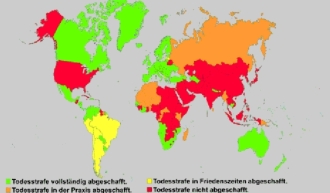
Während Dreharbeiten über das US-amerikanische Todesstrafensystem stiessen die Filmemacher Thomas und Rena Giefer sowie Konrad Ege 2005 im texanischen Hinrichtungsknast Huntsville auf Frances Newton. Sie begleiteten sie mit täglichen Interviews die letzte Woche ihres Lebens bis zu ihrer Hinrichtung. Gleichzeitig interviewten sie Unterstützer_innen von Frances und fanden heraus, was viele der 2.3 Millionen US-Gefängnisinsass_innen generell und speziell die im Todestrakt gemeinsam haben: fehlende finanzielle Mittel bedeuten so gut wie keine juristische Verteidigung. Selbst bei zweifelhafter bis falscher Beweislage ist es nicht möglich, aus dieser Maschine wieder herauszukommen. Unschuldsvermutung und Gleichheit vor dem Gesetz sind im US-Straf-und Justitzsystem kaum bekannte Begriffe. Das Ganze wird auch auf dem Hintergrund der ethnischen Herkunft beleuchtet - die Bilanz ist verheerend.
Der Film dauert 56 Minuten.
Thomas Giefer, einer der Macher_innen ist an einigen Abenden für eine anschliessende Diskussion
anwesend. Ausserdem gibt es die Möglichkeit, aktuelle Infos über Mumia Abu-Jamal zu bekommen.
Todesstrafe und Strafentwicklung in den USA
Hier einen Artikel zum Stand der Todesstrafe in den USA.
Berliner Mumia-Bündnis über das "Quasi-Moratorium" Todesstrafe in den USA
U.S. executions at a 13-year low
Schluss mit der Todesstrafe!
Ende des Jahres stimmt die Generalversammlung der Vereinten Nationen über einen weltweiten Hinrichtungsstopp ab. Eine positive Entscheidung wäre ein weiterer Meilenstein auf dem Weg zur weltweiten Abschaffung der Todesstrafe.
Inzwischen haben weltweit rund zwei Drittel aller Länder die Todesstrafe per Gesetz oder in der Praxis abgeschafft. Es ist also ein klarer Trend zur weltweiten Abschaffung der Todesstrafe zu erkennen. Der Grossteil der Weltbevölkerung jedoch lebt in Ländern, die Todesurteile aussprechen und vollstrecken.
- 90 Staaten haben die Todesstrafe ganz abgeschafft
- 11 Staaten haben die Todesstrafe in Friedenszeiten abgeschafft
- 32 Staaten vollstrecken die Todesstrafe in der Praxis nicht mehr
- Rund 133 Staaten haben die Todesstrafe im Gesetz oder in der Praxis abgeschafft
- 64 Staaten vollstrecken die Todesstrafe weiterhin
Die Erkenntnis, dass die Todesstrafe keinem modernen Menschenrechtsverständnis entspricht, findet zwar immer mehr Akzeptanz. Dennoch sitzen heute weltweit mehr als 20.000 Menschen im Todestrakt und warten auf ihre Hinrichtung.
Eine von ihnen ist Rizana Nafeek aus Sri Lanka. Mit 17 Jahren zog sie nach Saudi-Arabien, um als Haushaltshilfe für eine saudische Familie zu arbeiten. Rizana Nafeek war erst wenige Wochen in Saudi-Arabien beschäftigt und noch minderjährig, als sich ein tragischer Unfall ereignete, in dessen Folge das Baby der Familie in ihrer Obhut starb. Ein Gericht in Saudi-Arabien befand die inzwischen 19-Jährige des Mordes für schuldig und verurteilte sie zum Tode. Die junge Frau soll nun öffentlich mit einem Schwert geköpft werden.
Rizana Nafeek bestreitet den Mord. Kate Allen, Direktorin von amnesty international in Grossbritannien, sagte in einem Zeitungsinterview: "Es ist ein Skandal, dass sich die saudischen Behörden auf die Köpfung einer Teenagerin vorbereiten, die nicht einmal einen Anwalt im Gerichtsverfahren gestellt bekam." Als Vertragsstaat des UN-Übereinkommens über die Rechte des Kindes ist Saudi-Arabien verpflichtet, keine Straftäter hinzurichten, die zum Tatzeitpunkt jünger als 18 Jahre alt waren.
amnesty international erfährt immer wieder von Fällen, die auf schreckliche Weise zeigen, wie Staaten bei der Anwendung der Todesstrafe versagen. Häufig entsprechen Gerichtsverfahren, die mit einem Todesurteil enden, nicht den internationalen Standards für einen fairen Prozess: Die Verhandlungen finden hinter verschlossenen Türen statt. Angeklagten wird das Recht auf rechtlichen Beistand verwehrt. Todesurteile werden auf Grundlage von "Geständnissen" verhängt, die durch Nötigung, Folter oder Täuschung erpresst wurden. Manchmal wissen Angeklagte noch nicht einmal, dass sie zum Tod verurteilt worden sind und hingerichtet werden sollen.
In einer Reihe von Ländern wird die Todesstrafe bei einer Vielzahl von Vergehen verhängt, darunter auch für Wirtschaftsdelikte. Staaten, die Todesurteile verhängen, nehmen das Risiko, Unschuldige hinzurichten, billigend in Kauf, denn Justizirrtümer sind in keinem Rechtssystem der Welt auszuschliessen. Staaten, die auf die Todesstrafe setzen, verschliessen auch die Augen vor wissenschaftlichen Erkenntnissen: Längst ist belegt, dass von der Todesstrafe keine besondere abschreckende Wirkung ausgeht, vielmehr tragen Hinrichtungen zu einer Verrohung der Gesellschaft bei.
Die Todesstrafe verletzt das fundamentalste aller Menschenrechte: Das Recht auf Leben (Artikel 3 der Allgemeinen Erklärung der Menschenrechte). Für amnesty international gibt es daher nur ein Ziel: Die Todesstrafe weltweit ganz abzuschaffen.
Die Initiative der EU und weiterer Staaten, der UN eine Resolution für einen sofortigen und weltweiten Hinrichtungsstopp zur Abstimmung vorzulegen, bietet eine historische Chance, um dem Ziel von amnesty international einen entscheidenden Schritt näher zu kommen.
ai nimmt den Internationalen Tag gegen die Todesstrafe auch in diesem Jahr zum Anlass, um laut gegen diese Strafe zu protestieren. Setzen auch Sie ein deutliches Zeichen für einen weltweiten Hinrichtungsstopp - unterschreiben Sie die ai-Petition an die Generalversammlung der Vereinten Nationen.
Die Todesstrafe in den USA wackelt
Derzeit ist in den USA die Todesstrafe umstritten wie seit ihrer letzten Einführung 1976 nicht mehr. So berichtet die American Bar Association in ihrem aktuellen Bericht über die Todesstrafe in Pennsylvenia, dass die selbige durch starke "Unregelmässigkeiten" gekennzeichnet sei. Die Gefahr, dass "Unschuldige" hingerichtet würden, sei extrem hoch
(mehr hier).
Wir finden es völlig unwichtig, ob Menschen nach geltenden Gesetzten schuldig oder unschuldig in den Hinrichtungszellen landen, wir fordern die weltweite Abschaffung der Todesstrafe. Aber es freut uns ungemein, dass selbst im bürgerlichen Lager offen ausgesprochen wird, was Todesstrafengegner_innen seit Jahrzehnten sagen: Die Todesstrafe in den USA trifft hauptsächlich Menschen mit einer anderen als weissen Hautfarbe und Menschen ohne eigene finanzielle Möglichkeiten, sich angemessen in einem Verfahren mit Mordanklage zu verteidigen.
Das Pflichtverteidiger_innenprogramm ist völlig unzureichend. Seit der Verschärfung der Revisionsmöglichkeiten in Todesstrafenverfahren durch die Demokratische Partei in der Amtszeit Clintons haben Verurteilte nur sehr eingeschränkte Chancen, nachträglich auf gekommende Beweise ihrer Unschuld vor ein Gericht zu bringen. Das die ermittelnden Behörden von selbst kein Interesse an der Wahrheitsfindung haben, ist durch etliche von Verfahren bewiesen. Bisher mussten jedenfalls die meisten erfolgreichen Antragsteller_innen selbst dafür sorgen, dass ihre Fälle wieder vor einen Richter kamen.
So fordern seit Sommer 2007 viele Kommentatoren in öffentlichen Medien ein Moratorium der Todesstrafe. Erste Reaktionen sind spürbar.
Der Oberste Gerichtshof der USA stoppt immer öfter Hinrichtungen mit der Giftspritze. Aufgrund einer als besonders qualvoll gewerteten Hinrichtung mit der Giftspritze (der Hingerichtete Christopher Emmett war über 80 Minuten im Todeskampf) hob das Gericht faktisch alle Exekutionstermine solange auf, bis die Anwendung der Giftspritze weiter juristisch und medizinisch untersucht sei
(mehr hier).
Natürlich ist das noch nicht der Durchbruch für die Bewegung zur Abschaffung der Todesstrafe. Aber die Befürworter_innen der Todesstrafe sind in der Defensive, hier kann öffentlich spürbarer Druck jetzt sehr viel erreichen.
In der Unterstützungsarbeit für Mumia Abu-Jamal fordern wir seit Langen die weltweite Abschaffung der Todesstrafe. So findet derzeit in Berlin eine Veranstaltungsreihe vom Berliner Mumia-Bündnis statt. Mehr Infos.
Im Laufe unserer Kampagne fiel uns auf, dass es zwar eine Menge Menschenrechtsorganisationen gibt, die die gegen die Todesstrafe arbeiten, deren Kräfte aber sehr schwach und deren Willen zur Zusammenarbeit mit Gefangegnsolidaritätsgruppen wie z.b. uns sehr gering ist. Grundsätzliche politische Unterschiede und das Fehlen einer klaren Position zum Thema auf Seiten der Linken generell scheinen die Gründe hierfür zu sein.
Natürlich besteht in Teilbereichskampagnen und Bündnissen immer die Gefahr, sich in reformistischer Reparatur der "schlimmsten Auswüchse" zu verlieren. Andererseits verändert sich die Gefängnissituation auch in Deutschland rapide.
Private Knäste werden mit Zuschüssen der Bundesregierung bereits gebaut. So z.B. mit 500 Millionen Euro nahe Magdeburg. Dort wird ein Knast für 700 Gefangene gebaut, der den Betreibern die "Nutzungsrechte" auf 20 jahre festschreibt. Langzeitverurteilungen und privatisierte Gefängnisindustrie wie in den USA oder England gehen Hand in Hand ("Eine Gesellschaft ohne Gefängnisse", Angela Y. Davis,Schwarzer Freitag 2004 oder "Wettlauf gegen den Tod", Michael Schiffmann, Promedia 2006).
In Bezug auf die Todesstrafe sind im Augenblick die Neonazis der NPD dabei, dass Thema durch die Hintertür einzuführen. Ob es ähnlich dem Interessensgemisch von Regierung und Nazis zur Abschaffung des Asylrechts Anfang der 90er Jahre auch hier zu einem öffentlichen Durchbruch kommt, ist natürlich im Augenblick nicht vorstellbar. Aber Vorsicht scheint geboten.
Weitere Links über die Todesstrafe in den USA:
http://www.nodeathpenalty.eu/
http://todesstrafe-usa.de/
http://deathpenaltyusa.blogspot.com
Link über privatisierte Knästen:
http://media.de.indymedia.org/
http://www.anleger-nachrichten.de
Massenexekution in Kabul
Philladelphia Inquirer Calls for Death Penalty Moratorium
Blog: Philadelphia Inquirer Calls for Moratorium on the death penalty
Victory!!!! Kenneth Foster will live
Thursday, August 30, 2007
Movement to Save Kenneth Foster Wins Historic Victory Family members and supporters of Kenneth Foster, Jr. are jubilant in the reaction to Texas Governor Rick Perry's today's announcement today that he would commute the death sentence of Kenneth Foster, who was convicted under the controversial "Law of Parties" for a 1996 murder in which he had no actual involvement. The Board of Pardons and Paroles had recommened clemency by a vote of 6-1. Foster's execution had been scheduled for tonight.
In a statement announcing the commutation, Perry said, "I am concerned about Texas law that allowed capital murder defendants to be tried simultaneously and it is an issue I think the Legislature should examine."
Reaction among Foster's family and friends included both joy and disbelief. "We felt a bit of disbelief because Perry's decision was so unprecedented." said Dana Cloud of the Save Kenneth Foster campaign. "But everyone is so happy that Kenneth will be able to touch his wife and daughter and that we have a chance of seeing him free. Anything is possible when you are alive."
Claire Dube, a close high-school friend of Kenneth's and an active member of the Save Kenneth Foster Campaign, broke into tears when she heard the news. "We don't even know what to say. It's incredible."
Keith Hampton, Foster's attorney, also expressed relief and happiness at winning his client's life. Hampton thanked the activists of the grassroots movement that started in Austin and spread around the world for putting the necessary pressure on the Board and the Governor to win. "Extra-legal means work," he said. "Governor Perry once said that there was no hue and cry against the death penalty in Texas," commented Lily Hughes of the Campaign to End the Death Penalty. "Well, here was your hue and cry."
Foster's family and other supporters will continue to work to free him from prison. "It seems like ten years on death row under 23-hour lockdown could amount to time served for any crime that Kenneth ever committed," Cloud said.
Perry's decision is historic. Not only has the Board of Pardons and Paroles rarely recommended clemency (by one count, 3 times since 1982), but Rick Perry has overseen more executions than any Governor of the State of Texas, including George Bush. "This case demonstrated to the world just how arbitrary and capricious capital punishment is," Cloud said. "It gives people pause when someone who killed no one could come this close to being executed."
"Public sentiment has been turning against capital punishment," Hughes said. "We've seen a lot of states stop executing people. Winning Kenneth's life might be a real turning point in the history of the death penalty in Texas."
Auszug aus einem Bericht von Amnesty International, Koordinierungsgruppe gegen die Todesstrafe vom August 2007
Die Todesstrafe in den USA
In den USA sind im Jahr 2006 53 Häftlinge (2005: 60) in 14 Bundesstaaten hingerichtet worden. Die mit Abstand meisten Exekutionen fanden im Bundesstaat Texas statt (24). Damit hat sich die Gesamtzahl der Hinrichtungen in den USA seit Wiederzulassung der Todesstrafe im Jahr 1976 bis Ende 2006 auf 1.057 (darunter elf Frauen) erhöht. In diesem Jahr sind bis zum 10. August bereits wieder 32 Todesurteile vollstreckt worden.
Am 1. Januar 2007 gab es landesweit 3.350 zum Tode Verurteilte (darunter 124 Ausländer und 51 Frauen). Die meisten Häftlinge warten in den Todeszellen der Bundesstaaten Kalifornien, Florida, Texas und Pennsylvania auf ihre Hinrichtung.
38 der 50 Bundesstaaten sehen die Todesstrafe derzeit in ihren Gesetzen vor. Darüber hinaus kann die Todesstrafe im ganzen Land nach Bundes- und Militärrecht verhängt werden. In 34 Bundesstaaten sind seit 1977 Gefangene exekutiert worden. Bis auf New Hampshire haben alle Bundesstaaten, die die Todesstrafe erlauben, gegenwärtig Gefangene in ihren Todeszellen. Am 1. März 2005 entschied der Oberste Gerichtshof der USA im Verfahren Simmons gegen Missouri, dass die Verhängung der Todesstrafe gegen Jugendliche unter 18 Jahren gegen das in der Verfassung verankerte Verbot grausamer Bestrafung verstosse. 19 Einzelstaaten erlaubten bis dahin die Hinrichtung minderjähriger Straftäter. Seit der Wiederaufnahme von Hinrichtungen im Jahr 1977 sind 22 Todesurteile an zur Tatzeit unter 18-jährigen Straftätern vollstreckt worden, 13 davon im Bundesstaat Texas.
Im Bundesstaat Illinois sind 13 Justizirrtümer bekannt geworden. Der republikanische Gouverneur setzte daraufhin am 31. Januar 2000 die Todesstrafe auf unbestimmte Zeit aus. Mitte Januar 2003 begnadigte er vier Todestraktinsassen und wandelte nach einer ausführlichen Prüfung alle 167 ausgesprochenen Todesurteile um. Am 24. Juni 2004 erklärt der Supreme Court des Bundesstaats New York die Todesstrafe für verfassungswidrig. Der Gesetzgeber dieses Staats lehnte es im April 2005 ab, die Todesstrafe wiedereinzusetzen. Das Parlament des Bundesstaats New Jersey beschloss am 10. Januar 2006 mit 55 zu 21 Stimmen einen Hinrichtungsstopp. Eine vom Parlament eingesetzte Kommission empfahl Anfang Januar 2007 die Abschaffung der Todesstrafe in diesem US-Staat.
Die Bundesstaaten Delaware, Florida, Kalifornien, New Jersey und North Carolina haben aktuell den Vollzug der Todesstrafe wegen Zweifeln an der Verfassungskonformität von Gift-Exekutionen bis auf weiteres suspendiert. Ebenfalls wegen der Giftspritzenproblematik erhielten jüngst vier Todeskandidaten, die nach Bundesrecht zum Tode verurteilt sind, Hinrichtungsaufschübe. In Nebraska ruht seit dem 8. Mai 2007 der Vollzug mit dem elektrischen Stuhl, um auch diese Hinrichtungsmethode einer Überprüfung zu unterziehen.
Der Bundesstaat North Carolina ergriff im Mai 2007 eine Gesetzesinitiative, die Todesstrafe künftig in Fällen zu verbieten, in denen Angeklagte auf Grund ihrer ernsten geistigen Erkrankung zur Zeit ihrer Verbrechen ausserstande waren, die Bedeutung ihrer Taten zu begreifen. Mit Indiana and Washington erwägen gegenwärtig zwei weitere Bundesstaaten, ähnliche Gesetze zu erlassen. Der einzige US-Staat, der bereits ein solches Gesetz erlassen hat, ist Connecticut.
Link zu einem weiterer Artikel über Troy Davis (auf Deutsch)
Mensch/sein/
Troy Davis neues Berufungsverfahren zugestanden
Troy Davis erhielt am 3. August vom Georgia Supreme Court ein neues Berufungsverfahren zugestanden. Das ist ein juristischer Teilerfolg aber noch nicht der Sieg.
Troy Davis' Todesstrafe wurde ausgesetzt Artikel von Anmesty International
AMNESTY INTERNATIONAL USA
PRESS RELEASE
July 17, 2007
Amnesty International Applauds Stay of Execution for Troy Davis
(Atlanta) -- Amnesty International USA (AIUSA) applauded today's decision by the Georgia State Board of Pardons and Paroles to grant a 90-day stay of execution to Troy Anthony Davis, who has spent 15 years on death row for a murder that he denies committing. Davis, 38, was convicted despite the lack of a murder weapon or physical evidence linking him to the crime.
"Let today begin a new day for truth and justice in Georgia," said Larry Cox, executive director of AIUSA. "We call upon the Georgia Parole Board to recognize that in the United States, one is innocent until proven guilty -- and in the absence of such proof, there is no acceptable choice but to grant clemency. The Board must recognize the flawed logic of executing a man who may be innocent."
Troy Anthony Davis, who is African American, was convicted in 1991 of murdering Mark MacPhail, a white police officer. The prosecution based its case on the testimony of purported "witnesses," many of whom allege police coercion. Seven of the nine non-police witnesses for the prosecution have recanted or contradicted their testimony in sworn affidavits, and nine people assert that one of the two who hasn't recanted is actually responsible for the murder.
Despite this, Davis' habeas corpus petition was denied by the state court on a technicality -- evidence of police coercion was "procedurally defaulted," that is, not raised earlier, so the court did not take it. The Georgia Supreme Court and 11th Circuit Federal Court of Appeals deferred to the state court and rejected Davis' claims, and earlier this month the U.S. Supreme Court refused to hear his case.
"We are deeply saddened that the MacPhail family has suffered such pain and hope that today's decision will lead to a fair and earnest search for justice," said Sue Gunawardena-Vaughn, director of AIUSA's Program to Abolish the Death Penalty. "Now that the Board has issued a stay of execution, it is time for authorities to reopen their investigation and seek the truth. Only in that way can society honor the memory of Mark MacPhail."
Amnesty International has long-standing concerns about Troy Davis's case. In February of this year, the organization released a 35-page report.
This way to the report.
"Where is the Justice for Me? The case of Troy Davis, facing execution in Georgia." In recent weeks the organization has mobilized its worldwide membership and collected thousands of letters calling for clemency for Mr. Davis.
Contact: Wende Gozan at 212/633-4247 or Jared Feuer at 404/668-8388
http://www.ipsnews.net/news.asp?idnews=38561
On the Issue of Innocence / Stoppt die Todesstrafe
Texas Medical Examiner No Longer Stands by Testimony that sent Woman to Death Row Just weeks before Texas is scheduled to execute Cathy Henderson (pictured) for the murder of a child that she was babysitting, the medical examiner whose testimony helped send her to death row has said he no longer stands by his original opinion that the child's death resulted from an intentional act on Henderson's part. In light of new scientific evidence showing that Brandon Baugh's death could have resulted from an accidental fall, retired Travis County chief medical examiner Roberto Bayardo has submitted an affidavit to the court stating, "Had the new scientific information been available to me in 1995, I would not have been able to testify the way I did about the degree of force needed to cause Brandon Baugh's head injury. I cannot determine with a reasonable degree of medical certainty whether Brandon Baugh's injuries resulted from an intentional act of an accidental fall."
Since her arrest nearly 13 years ago, Henderson has maintained that Brandon Baugh's death was the result of a tragic accident. She claims that the infant accidentally fell from her arms after she stepped on a toy while spinning him around. During her trial, Bayardo testified that Baugh's injuries could not have resulted from a short distance fall, as Henderson claimed. Now, based on recent studies and biochemical analysis, four experts in the field of forensic pathology have concluded that Bayardo erred in concluding that the injuries sustained by the infant could not have come from a "short distance fall" of four feet or less. One of the experts, Dr. John Plunkett, stated in an affidavit, "It is impossible for any qualified scientist or physician to conclude, whether to a reasonable degree of medical certainty or beyond a reasonable doubt, that any intentional and deliberate act caused Brandon Baugh's death."
Henderson's execution is scheduled for June 13. She has petitioned the Texas Court of Criminal Appeals to stay her execution and review her case based on the new scientific evidence.
(Court TV.com, May 30, 2007). See Court TV's Web page about this case. See also Women.
The Long Ordeal of Harold Wilson
By LINN WASHINGTON, Jr.
St. Denis, France.
Harold Wilson drank wine for the first time in nearly twenty years during his recent trip to this working class city located in the suburbs of Paris known for its left-of-center politics. Lack of access, not avoidance, had driven Wilson's abstinence from all alcoholic beverages.
Wilson spent nearly 18-years in Pennsylvania prisons - sixteen on death row where he twice faced imminent execution for a triple-murder that DNA evidence eventually proved he didn't commit.
Wilson's drink of good French wine came during salutes to him at a large, communal dinner inside a church on one of the city's most famous squares. These salutes erupted after Wilson briefly described the injustices he endured, including death row experiences like smelling the burning flesh of an inmate who ignited himself in an insane reaction to repeated callousness by guards.
"I didn't have to go to war to experience brutality and death," Wilson said, fighting to control parallel emotions from recalling death row incidents and reacting to the compassion towards him from those attending that dinner.
Wilson, who is 6'4" tall weighing nearly 250 lbs., is the sixth person freed from Pa's death row and the 122nd person released from death rows nationwide. Wilson said flawed evidence authorities used to convict him included a bloody jacket that fit a person eight inches shorter and 60 lbs lighter than him. Wilson is now an advocate of providing assistance to persons released from death row.
When Pa authorities released Wilson in November 2005, after a jury acquittal at a retrial, he received sixty-five cents, a public transportation token and a warning: Don't come back.
Wilson traveled to St. Denis as a member of a small delegation from his hometown of Philadelphia to participate in the one year anniversary of the naming of a small street in St. Denis for Pa death row journalist Mumia Abu-Jamal.
Wilson eagerly says Abu-Jamal, also from Philadelphia, helped him adjust to the deprivations of death row and helped him with the legal research producing his successful appeals. "Mumia taught me how to read law books. He taught me to fight with a pen," Wilson told a St. Denis supporter of Abu-Jamal hours before the dinner.
"Working to free Mumia and others gives me identity and purpose. I struggle everyday to rebuild my life." Days before traveling to St. Denis, Wilson spoke at an Abu-Jamal event in Philadelphia featuring Danny Glover, the famed actor/activist who called Abu-Jamal's conviction a "legal lynching."(1)
The legal improprieties leading to a new trial for Wilson - discriminatory jury selection practices by the prosecutor and incompetence by his court appointed trial lawyer - are core issues in Abu-Jamal's controversial conviction.
Like Abu-Jamal's trial attorney, Wilson's court appointed attorney was trying his first death penalty case. The trial lawyers for Abu-Jamal and Wilson both failed to present critical evidence at trial. Discriminatory jury selection is the central issue in the scheduled May 17th hearing for Abu-Jamal before the federal Third Circuit Court of Appeals.
The prosecutor in Abu-Jamal's 1982 trial for killing a Philadelphia policeman used nearly all of his fifteen challenges to remove blacks from the jury.
The jury that convicted Abu-Jamal contained only two blacks in a city where forty percent of the population was black at the time of trial. That jury contained a white man who said from the outset that he would not be fair to Abu-Jamal and other whites who "had close friends or relatives who were police officers," noted author/investigative reorter Dave Lindorff in his excellent book Killing Time: An Investigation Into The Death Row Case of Mumia Abu-Jamal.
Rulings by Pa's Supreme Court have consistently rejected allegations of discriminatory jury selection at Abu-Jamal's trial but a federal District Court judge found evidence of this misconduct meriting appellate court review.
In contrast to Abu-Jamal's case, the Pa Supreme Court granted an appeal from Wilson after finding evidence of discriminatory jury selection by his trial prosecutor.
The prosecutor in Wilson's case was the instructor in a now infamous Philadelphia DA Office training video showing new prosecutors how to evade US Supreme Court prohibitions against excluding blacks from death penalty juries.(2)
Lindorff and other experts say the instructions on that 1987 training video reflect long-standing discriminatory jury selection practices utilized by Philadelphia prosecutors. Lindorff writes in his book, "the Philadelphia district attorney's office, over the period 1977-1986, including the trial of Abu-Jamal in 1982, struck black jurors 58 percent of the time, compared to only 22 percent of the time for white jurors."
The specific prosecutor in Abu-Jamal's trial,(3) according to scholarly research, struck blacks 74 percent of the time during that 1977-1986 period compared to 25 percent for whites. The fact that the Pa Supreme Court curtly rejected Abu-Jamal's jury discrimination claims while granting relief to Wilson and other defendants using similar evidence is often cited as an example of double-standards authorities employ in the Abu-Jamal case.
Amnesty International's 2000 report on the Abu-Jamal case criticizes Pa's entire state judicial system for rulings against Abu-Jamal based on political considerations instead of legal precedent. (4)
The St. Denis street naming is another case study in doublestandards. The April 2006 naming of a block-long street in a secluded section of St. Denis prompted the December 2006 passage of a resolution by the US Congress demanding the removal of Abu-Jamal's name from this small lane sandwiched between two one-way streets.
Months before passage of this congressional resolution, Philadelphia's City Council and Pa's State Senate passed similar resolutions assailing the naming of a street in honor of a convicted murderer.
In contrast to the criticism of St. Denis, in 1990, New York City officials changed the name of a street in front of a federal prison to honor a prisoner being held there, an escaped IRA fugitive convicted in Northern Ireland of murdering a British special forces officer.
Officials across America, including over 100 members of Congress, applauded Joe Doherty's long fight against extradition contending the IRA fighter did not receive a fair trial from British authorities. (5) St. Denis' Mayor and immediate past Mayor both criticized the unfairness of Abu-Jamal's 1982 trial during their remarks at the recent anniversary of the street naming.
That Amnesty report concluded that Abu-Jamal's trial failed to meet internationally acceptable standards for a fair trial. A core aspect of a fair trial is an impartial judge and the alleged pro-prosecution bias of Abu-Jamal's trial judge during a 1995 appeals hearing is an item under review by the Third Circuit appeals court.
The outrageous bias exhibited by Judge Albert Sabo during that '95 appeal hearing triggered harsh editorial criticism from Philadelphia's normally anti-Abu-Jamal mainstream media.
However, Pa's Supreme Court brushed aside that editorial criticism. Years later, the same Court curtly dismissed a disturbing charge that Sabo was overheard on the eve of the '82 trial saying he was going to help prosecutors "fry the nigger!" The Court claimed Sabo's racist remark was irrelevant.
Harold Wilson, while in St. Denis, participated in a short protest march demanding a fair trial for Abu-Jamal. He later participated in the May Day March in Paris, walking with a large "Free Mumia" delegation. After those dinner salutes to Wilson, he later laughed with diners sitting near him saying French wine is "much better than Thunderbird" and other faux wines he drank prior to incarceration.
Linn Washington Jr. is a Philadelphia based journalist who has covered the Abu-Jamal case for 25 years.
-----
(1)For the Philadelphia events on Abu-Jamal's 53rd birthday, see Betsey Piette, "'Free Mumia' rally overcomes police intimidation, " Workers World, May 3, 2007, News section of www.againstthecrimeofsilence.de.
(2) The name of the prosecutor in question is Jack McMahon.. To get a copy of the video, you can write to my e-mail address mikschiff@t-online.de. For a partial transcript from the June 1997 issue of Harper's, see "Jury Rigging Laid Bare,"
(3) Assistant District Attorney Joseph McGill.
(4) Amnesty International, The Case of Mumia Abu-Jamal. A Life in the Balance, Seven Stories Press, New York 2000. The appeals process discrimination against Mumia Abu-Jamal is dealt with on p. 43-50.
(5) For the amazing case of IRA member Joe Doherty, see Martin Dillon, Killer in Clowntown: Joe Doherty, the IRA and the Special Relationship, Hutchinson, London 1992. In the March 1993 issue of Contemporary Review, reviewer Esmond Wright wrote on that book: that even during his nine years in the New York Correctional Center, "near the spot where New York honored him by giving his name to a street - he had sympathizers, including over 130 Congressmen and a son of President Bush."